Friday, September 19, 2014

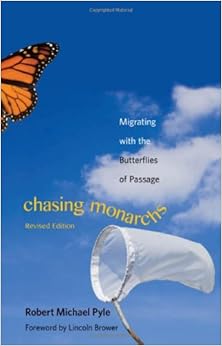
Chasing Monarchs: Migrating with the Butterflies of Passage by Robert Michael Pyle

Summary from Amazon:
Although no one had ever followed North American monarch butterflies on their annual southward journey to Mexico and California, in the 1990s there were well-accepted assumptions about the nature and form of the migration. But to Robert Michael Pyle, a naturalist with long experience in monarch conservation, the received wisdom about the butterflies’ long journey just didn’t make sense. In the autumn of 1996 he set out to uncover the facts, to pursue the tide of “cinnamon sailors” on their long, mysterious flight.
Chasing Monarchs chronicles Pyle’s 9,000-mile journey to discover firsthand the secrets of the monarchs’ annual migration. Part road trip, part outdoor adventure, and part natural history study, Pyle’s book overturns old theories and provides insights both large and small regarding monarch butterflies, their biology, and their spectacular migratory travels. Since the book’s first publication, its controversial conclusions have been fully confirmed, and monarchs are better understood than ever before. The Afterword for this volume includes not only updated information on the myriad threats to monarch butterflies, but also various efforts under way to ensure the future of the world’s most amazing butterfly migration.


Review from Yale University Press: 
http://yalepress.yale.edu/yupbooks/reviews.asp?isbn=9780300203875

Documentary: Tracking the Monarch Migration from Nova: 
http://www.pbs.org/wgbh/nova/nature/monarch-migration.html
(http://wingedbeautydotcom.files.wordpress.com/2012/01/zablowbutt_first60-13_lrge.jpg)

Robert Michael Pyle's Facebook Page
https://www.facebook.com/pages/Robert-Michael-Pyle/293832101900

Other Books by the author: 
http://www.villagebooks.com/event/robert-michael-pyle-5/10/14

Recent Reading at Penn State, September 4, 2014: 
http://psbehrend.psu.edu/news-events/events/september-4-robert-michael-pyle-reading

ID tools for Identifying Butterflies and Moths:
http://www.butterfliesandmoths.org/identification_tools

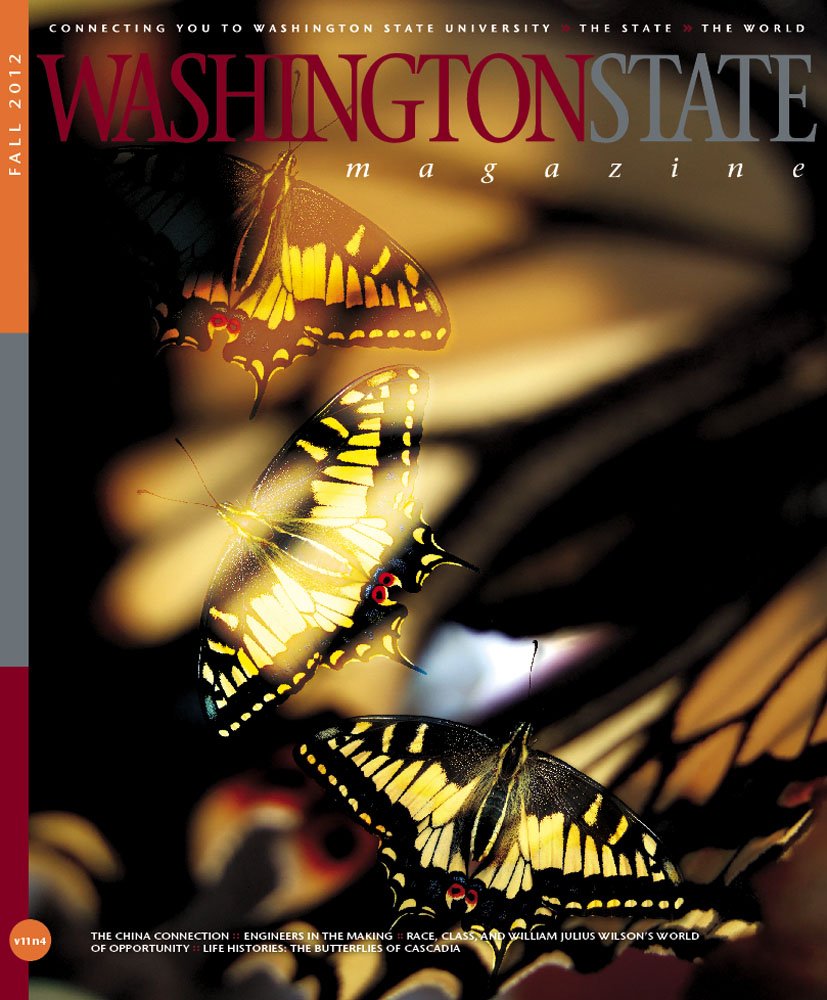
In the Washington State Magazine: Life Histories of the Butterflies of Cascadia:
http://wsm.wsu.edu/s/index.php?id=980

Some mentioned Butterflies of the West Coast of US:
Woodland Skipper:
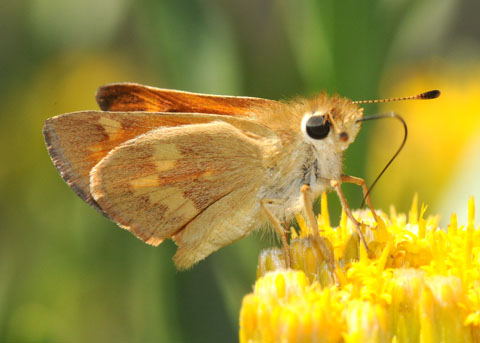
(http://nathistoc.bio.uci.edu/lepidopt/hesper/DSC_0557b.jpg)
Clouded Sulphur:
(http://www.butterfliesandmoths.org/sites/default/files/imagecache/gallery_for_colorbox/species_images/Colias_philodice2.jpg)

Compton tortoiseshell: 
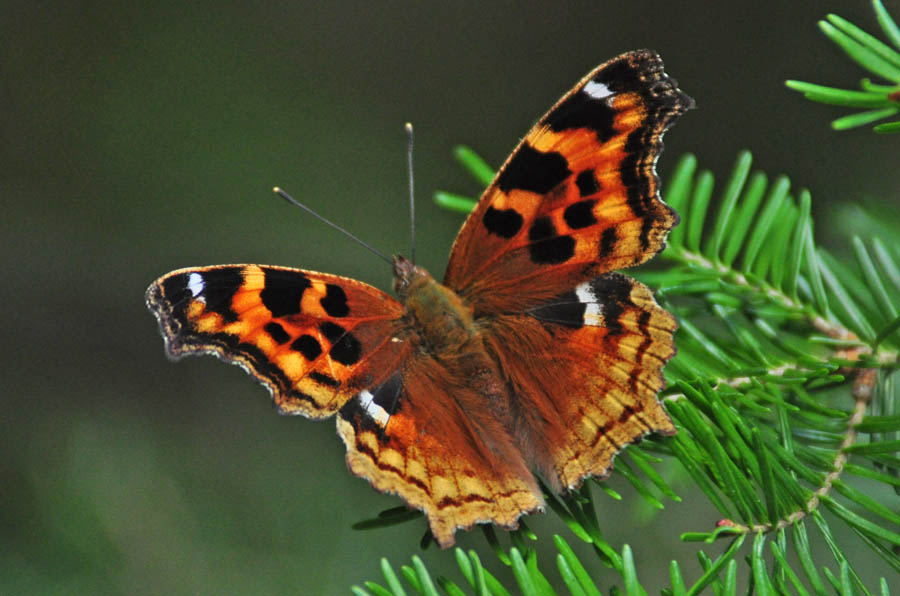
(http://www.thehibbitts.net/troy/photo/lepidoptera/compton.tortoiseshell.mn.cook.10.1a.jpg)

Becker's White: 
(http://bugguide.net/images/raw/6ZKL1Z8L1Z4L2Z5HZR5L9ZILAZ2HBH8H2ZZLNZEH9Z5LRR4HGZQL1ZEHFHXLGZ7LNZILLR8L9ZMLFH.jpg)


*   *   *   *   *   *   *   *   *   *   * 


Interview with Robert Michael Pyle: 
http://podcastcafe.org/radiofreefundi/files/Bob-Pyle-Butterfly-Big-Year.html

Discussion Questions to Follow:
1. What predators do monarchs encounter along their journey? See pp 35, 41, 48
2. What plants are similar to milkweed? See page 26.
3. When did migration actually start? Discuss the "Columbus Hypothesis", page 50.
4. Discuss other things that challenge monarchs along the route, including weather, difficult water crossings, etc. 
5. Discuss tagging of monarchs.
6. How have the changes in the landscape including damming effected migration patterns?
7. How did the author's theories about monarch migration influence research and lead to its confirmation?

Monday, September 1, 2014

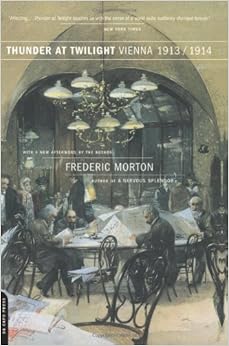
Thunder at Twilight: Vienna 1913/1914 by Frederic Morton


Summary from Good Reads:
"Thunder at Twilight is a landmark of historical vision, drawing on hitherto untapped sources to illuminate two crucial years in the life of the extraordinary city of Vienna—and in the life of the twentieth century. It was during the carnival of 1913 that a young Stalin arrived on a mission that would launch him into the upper echelon of Russian revolutionaries, and it was here that he first collided with Trotsky. It was in Vienna that the failed artist Adolf Hitler kept daubing watercolors and spouting tirades at fellow drifters in a flophouse. Here Archduke Franz Ferdinand had a troubled audience with Emperor Franz Joseph—and soon the bullet that killed the archduke would set off the Great War that would kill ten million more. With luminous prose that has twice made him a finalist for the National Book Award, Frederic Morton evokes the opulent, elegant, incomparable sunset metropolis—Vienna on the brink of cataclysm."


Article from the BBC News: "1913: When Hitler, Trotsky, Tito, Freud and Stalin all lived in the Same Place" http://www.bbc.com/news/magazine-21859771


(http://cdnstatic-2.mydestination.com/library/images/526928_638_365.jpg)

Vienna Review Interview with Morton: At Home with Language: http://www.viennareview.net/on-the-town/at-home-in-language

Discussion Questions:
1. What were the factors that made Vienna at this time the center stage for many significant persons of the century?
2. What were the different groups and who were some of these people?
3. How did the rigidity of the culture and society of Europe, especially in Austria, as mirrored in the relationship of Franz Ferdinand and his wife, help make the war inevitable?
4. What made the relationship between Franz Joseph and Franz Ferdinand so difficult?
5. Discuss the relationship between Austria - Hungary and Serbia and the issues that caused tensions between these countries.
6. Was Austria unreasonable in their ultimatum to Serbia?
7. What other action could they have taken in response to the assassinations?
8. What were factors that caused the war to be so horrific, and why was this not better anticipated?
9. How and could Franz Ferdinand have made a difference in preventing the war if he had lived?
10. Why did so many people mistakenly think that his views made war more likely?

(https://c2.staticflickr.com/8/7178/6869070033_77266ee7e7_z.jpg)

(http://www.franz-josef.cz/data/image/34181/510x400/fit.jpg)


Monday, July 7, 2014

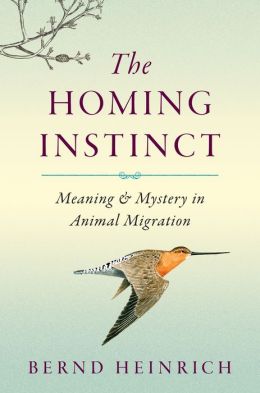
Bernd Henrich's The Homing Instinct: Meaning and Mystery in Animal Migration


Book Summary provided by Good Reads:
"Heinrich explores the fascinating science chipping away at the mysteries of animal migration: how geese imprint true visual landscape memory; how scent trails are used by many creatures, from fish to insects to amphibians, to pinpoint their home if they are displaced from it; and how the tiniest of songbirds are equipped for solar and magnetic orienteering over vast distances. Most movingly, Heinrich chronicles the spring return of a pair of sandhill cranes to their home pond in the Alaska tundra. With his trademark “marvelous, mind-altering” prose (Los Angeles Times), he portrays the unmistakable signs of deep psychological emotion in the newly arrived birds—and reminds us that to discount our own emotions toward home is to ignore biology itself." 

Washington Post Review: "The Homing Instinct: Meaning and Mystery in Animal Migration by Bernd Heinrich and The Surprising Lives of Birds and What they reveal about being Human by Noah Stryckern" by David Gessner: http://www.washingtonpost.com/opinions/the-homing-instinct-meaning-and-mystery-in-animal-migration-by-bernd-heinrich-and-the-surprising-lives-of-birds-and-what-they-reveal-about-being-human-by-noah-stryckern/2014/05/02/290cc28c-ced1-11e3-a6b1-45c4dffb85a6_story.html

Q & A with Bernd Heinrich on A Way to Garden (also Podcast available)
http://awaytogarden.com/homing-instinct-bernd-heinrich/

"Do Humans have some kind of Homing Instincts . . ," Scientific American, Oct. 21, 1998
http://www.scientificamerican.com/article/do-humans-have-some-kind/

PBS Nature Video: "Extraordinary Cats: Homing Instinct"
http://www.pbs.org/wnet/nature/episodes/extraordinary-cats/homing-instinct/2170/

Homing, Migration and Navigation: Cornell Lab of Ornithology:
http://www.birds.cornell.edu/AllAboutBirds/studying/migration/navigation

Discussion Questions:
1. How are the topics, migration and homing similar and different?
2. Do humans have a homing instinct?
3. What positive and negative lessons can we as humans learn from the herding mentality?
4. How do animal and human home making and it's implications compare?
5. Discuss what you found surprising? Consider the eel, grasshopper, orb weaver spider, passenger pigeon, godwit, moth, etc.
6. Discuss the different means of migration including smell, magnetic, stars and sun.
7. Discuss the interaction of animals in their home territories including the effect of the American Chestnut and also bed bugs and other parasites in nests and homes.
8. Discuss predator and prey relationships as with the spider and passenger pigeon.
9. Discuss the successes and disasters of home building and site choices of animals versus humans including the Suriname trip.

(Pic from: http://4.bp.blogspot.com)

Sunday, May 11, 2014

The President's Club by Nancy Gibbs and Michael Duffy


(Photo is from Time of the authors)

Summary from Good Reads:
The Presidents Club, established at Dwight Eisenhower’s inauguration by Harry Truman and Herbert Hoover, is a complicated place: its members are bound forever by the experience of the Oval Office and yet are eternal rivals for history’s favor. Among their secrets: How Jack Kennedy tried to blame Ike for the Bay of Pigs. How Ike quietly helped Reagan win his first race in 1966. How Richard Nixon conspired with Lyndon Johnson to get elected and then betrayed him. How Jerry Ford and Jimmy Carter turned a deep enmity into an alliance. The unspoken pact between a father and son named Bush. And the roots of the rivalry between Clinton and Barack Obama.

Time magazine editors and presidential historians Nancy Gibbs and Michael Duffy offer a new and revealing lens on the American presidency, exploring the club as a hidden instrument of power that has changed the course of history
http://www.goodreads.com/book/show/12410640-the-presidents-club

(Photo from the Washington Post of present and past Presidents alive today)

NY Times Book Review: 
http://www.nytimes.com/2012/04/18/books/the-presidents-club-by-nancy-gibbs-and-michael-duffy.html

The Simon and Schuster's Reading Group Guide:
http://books.simonandschuster.com/Presidents-Club/Nancy-Gibbs/9781439127728/reading_group_guide

The Discussion Questions from the above listed S&S Reading Group Guide:
1.List and discuss the most unlikely relationships in the Presidents Club. Who reached farthest across the aisle? Why are former and current presidents so likely to work together, even when their policies and personalities differ so drastically? Consider Truman utilizing Hoover in Europe all the way through Clinton and Bush 43’s current joint humanitarian efforts. 

2.Do presidents seem to have more influence when in office, or after? Name a president whose policy and experience lasted far beyond their term(s). Are there any who seemed especially ill-suited to lead at the time of their presidency, but invaluable upon leaving the position? 

3.Was Johnson at fault for not helping protect Nixon’s presidency? Are there truly limits to how far a club member should go to protect one of its few brothers? 

4.Compare and contrast Eisenhower’s strictly regimented, committee-oriented style of leadership to Kennedy’s looser, on-the-fly tendencies. What seems the best way for a president to administer his power? For that matter, where exactly does the power of a president reside—in his ability to unilaterally think on his feet, or the various specialists and experienced people at his disposal? 

5.Eisenhower said (of Kennedy), “I am all in favor of the United States supporting the man who has to carry the responsibility of our foreign affairs.” There is a strain of thinking in early club members that the public should unconditionally support the hard decisions a president must make, lest the rest of the world view us as weak and un-unified. Do you agree with this? Is dissent and assembly against a president’s policies something citizens should avoid? 

6.It is often said that a president’s success can be measured by the disasters he avoids. The authors even write, “We know what happened when each president presided; they are often just as proud of what didn’t happen.” How has the Presidents Club helped men in office to avert calamity? Consider especially JFK’s utilization of Eisenhower during the Bay of Pigs and Cuban Missile Crisis, and Clinton’s call upon Nixon for advice on Russia and Bosnia. 

7.Many club members (Truman the haberdasher, Eisenhower the soldier, Reagan the actor) did not choose politics as a first profession, and came to the game relatively late in their careers. Yet, these three are some of the most esteemed, sought-after minds in the history of the club’s ranks. What do you make of non-politician politicians? Is there something to be said for their prior experience making them more efficient presidents and counselors? 

8.Discuss LBJ’s nearly manic use of the Club’s knowledge for speech writing, policy making, and deal-brokering. Is there a point at which a president must shake free of the club and establish himself as separate from his predecessors? 

9.Was Jimmy Carter “worth the trouble?” What do you make, in lights of today’s Arab state, of his furtive appeal to Arab and world leaders behind Bush’s (and the UN’s ) back? Did he go against Club code? Were his actions treasonous? Was his shunning by Bush 41 warranted? 

10. Though Clinton had the most former club members at his disposal (5 in total), individual relations with his predecessors all took on a unique, half-antagonistic quality. Discuss his collaborations (and attendant contentions) with Nixon (Russia), Jimmy Carter (Korea and Haiti), and Ford (Clinton’s impeachment trial.) Were the club members helping the president, or protecting the presidency? 

11.Do you think Bush 43 would have had a more successful presidency if there were not an “unspoken pact” between father and son regarding presidential advice? Would Bush 41, with an impressive record of foreign policy achievements and national deficit reduction, have been able to avoid some of today’s major American problems by doling out executive wisdom to his son? 

12.Gibbs and Duffy write, “Presidents typically land in office thinking they know better than their predecessors. Having just spent an entire campaign convincing voters this is the case, they naturally come to believe it themselves. But then something like a chain reaction occurs: they win the office, then the office strikes back, challenging a president, chastening him, confronting him with all he doesn’t know.” How does this apply to Obama’s presidency? Though he campaigned on the notion of an end of Clintonian democracy, has his presidency now transformed to a facsimile of the 42nd President’s policies and sensibilities? 

13.What were the most notable instances of duplicity between members of the club, both before and after their appointments? In what ways were they able to bury the hatchet after becoming former presidents? Consider Ike and JFK, Nixon and Johnson, Nixon and Reagan, Ford and Carter, and the rivalry between Clinton and Obama. 

14.In the conclusion, the authors write, “If the Presidents Club had a seal, around the ring would be three words: cooperation, competition, and consolation.” Identify a particularly salient instance of each of these ideas during the Club’s colorful history. 
- See more at: http://books.simonandschuster.com/Presidents-Club/Nancy-Gibbs/9781439127728/reading_group_guide#sthash.FTcRN2De.dpuf

Book Discussion on C-span: 
http://www.c-span.org/video/?306529-1/book-discussion-presidents-club


History Book Review Interview:

A Short Summary by Nancy Gibbs by Time:


(Photo from The Washington Post)


Thursday, March 27, 2014

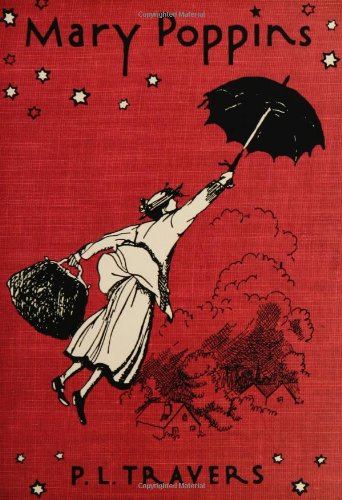
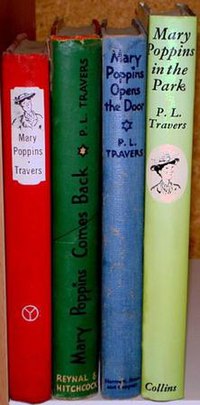
Mary Poppins by P. L. Travers


Discussion Questions:
1. Who is Mary Poppins? Where does she come from?
2. What unique qualities does Mary Poppins possess?
3. What chapters were not in the movie and why?
4. What kind of parents are Mr. and Mrs. Banks?
5. What will become of the children after Mary Poppins leaves?
6. Did Mary Poppins leave a meaningful impression on the Banks?
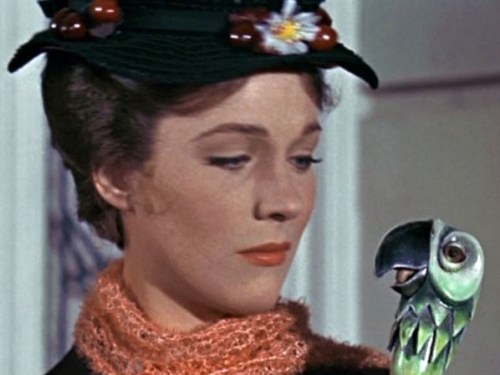
7. After watching "Saving Mr. Banks", do you view the story differently? Why?
8. How well did the movie "Mary Poppins" capture the book and what makes it different?
9. Discuss your favorite parts of the book and movie and why!

Disney's Official Site for the movie:
http://movies.disney.com/mary-poppins


Summary about the author from Goodreads: 
http://www.goodreads.com/author/show/6872556.P_L_Travers


New Yorker Article: Life and Letters:  Becoming Mary Poppins:
http://www.newyorker.com/archive/2005/12/19/051219fa_fact1

Biography about P.L. Travers: Mary Poppins, She Wrote
http://www.amazon.com/Mary-Poppins-She-Wrote-Travers/dp/1476762929

Spoonful of Sugar on YouTubehttps://www.youtube.com/watch?v=HrnoR9cBP3o

The Secret Life of Mary Poppins - BBC Documentary from 1964:
https://www.youtube.com/watch?v=s3sqRDqVEBE

Nine 'Mary Poppins"Facts from "Saving Mr. Banks" that they did not get right: http://www.hypable.com/2014/01/10/saving-mr-banks-mary-poppins-facts/


Mary Poppins Lesson Planshttp://www.squidoo.com/mary-poppins-lesson-plans

Mary Poppins Study Guidehttp://www.pcpa.org/outreach/poppins_studyguide.pdf

Other Books by P.L. Travers:


Tuesday, February 18, 2014

The Zealot: The Life and Times of Jesus of Nazareth, by R. Aslan


Questions and Topics for Discussion from Random House:  

1. What is the difference in the ancient mind between Fact and Truth?

2. Discuss the Jewish definition of Messiah. Was this a religious or political office, or both?

3. Define the roles of the Jewish priestly hierarchy in Judea. How would a typical Galilean family like Jesus’ view this group?

4. How did Jesus’ upbringing in Nazareth lead him to a deeper understanding of social justice?

5. Discuss the Roman occupation? How did this political context shape Jesus’ outlook and actions?

6. What role did the Temple of Jerusalem play in the lives of the Jews in Jesus’ time?

7. With the above questions in mind, how do the words of the Gospels reflect Jesus’ relationship with both the Romans and the Jewish hierarchy and his call for social justice?

8. After Jesus’ death, his followers formed two separate camps based on two competing interpretations of his teachings. What are your thoughts on James and Paul?

9. How did James’ and Paul’s differences form the Christian church we know today? Why do you think Paul’s interpretation flourished?

Fox News Interview:
http://www.slate.com/blogs/the_slatest/2013/07/28/video_fox_news_lauren_green_asks_reza_aslan_why_muslim_would_be_interested.html

Interview with Jon Stewart:
http://www.huffingtonpost.com/2013/12/12/reza-aslan-jon-stewart-fox-news-interview-muslim-christianity_n_4433398.html