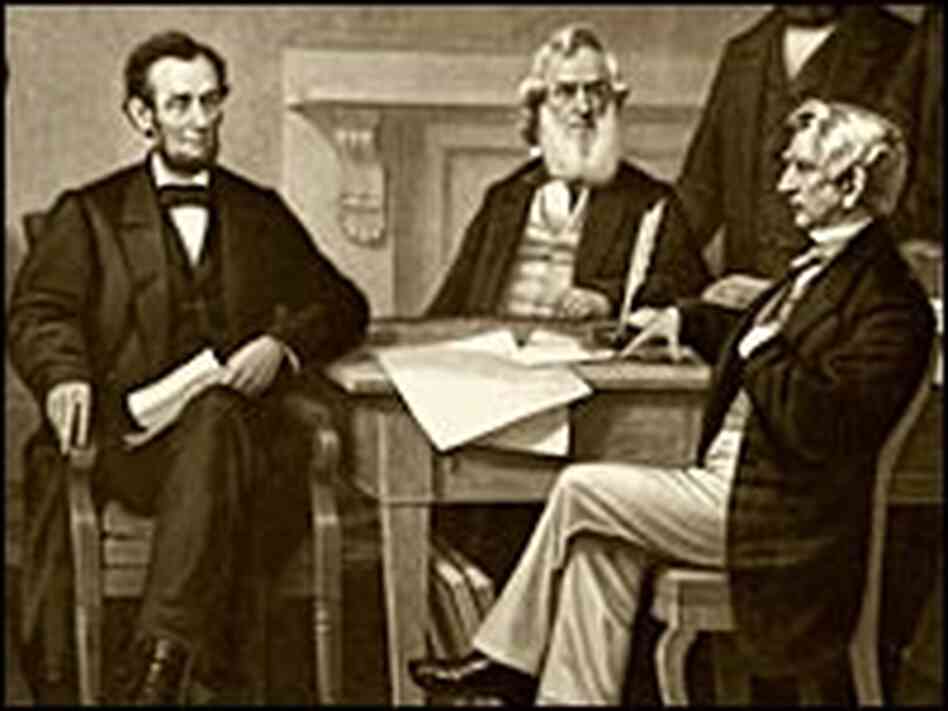
(Photo is from Time of the authors)
The Presidents Club, established at Dwight Eisenhower’s inauguration by Harry Truman and Herbert Hoover, is a complicated place: its members are bound forever by the experience of the Oval Office and yet are eternal rivals for history’s favor. Among their secrets: How Jack Kennedy tried to blame Ike for the Bay of Pigs. How Ike quietly helped Reagan win his first race in 1966. How Richard Nixon conspired with Lyndon Johnson to get elected and then betrayed him. How Jerry Ford and Jimmy Carter turned a deep enmity into an alliance. The unspoken pact between a father and son named Bush. And the roots of the rivalry between Clinton and Barack Obama.
Time magazine editors and presidential historians Nancy Gibbs and Michael Duffy offer a new and revealing lens on the American presidency, exploring the club as a hidden instrument of power that has changed the course of history
http://www.goodreads.com/book/show/12410640-the-presidents-club

(Photo from the Washington Post of present and past Presidents alive today)
NY Times Book Review:
http://www.nytimes.com/2012/04/18/books/the-presidents-club-by-nancy-gibbs-and-michael-duffy.htmlThe Simon and Schuster's Reading Group Guide:
http://books.simonandschuster.com/Presidents-Club/Nancy-Gibbs/9781439127728/reading_group_guide
The Discussion Questions from the above listed S&S Reading Group Guide:
1.List and discuss the most unlikely relationships in the Presidents Club. Who reached farthest across the aisle? Why are former and current presidents so likely to work together, even when their policies and personalities differ so drastically? Consider Truman utilizing Hoover in Europe all the way through Clinton and Bush 43’s current joint humanitarian efforts.
2.Do presidents seem to have more influence when in office, or after? Name a president whose policy and experience lasted far beyond their term(s). Are there any who seemed especially ill-suited to lead at the time of their presidency, but invaluable upon leaving the position?
3.Was Johnson at fault for not helping protect Nixon’s presidency? Are there truly limits to how far a club member should go to protect one of its few brothers?
4.Compare and contrast Eisenhower’s strictly regimented, committee-oriented style of leadership to Kennedy’s looser, on-the-fly tendencies. What seems the best way for a president to administer his power? For that matter, where exactly does the power of a president reside—in his ability to unilaterally think on his feet, or the various specialists and experienced people at his disposal?
5.Eisenhower said (of Kennedy), “I am all in favor of the United States supporting the man who has to carry the responsibility of our foreign affairs.” There is a strain of thinking in early club members that the public should unconditionally support the hard decisions a president must make, lest the rest of the world view us as weak and un-unified. Do you agree with this? Is dissent and assembly against a president’s policies something citizens should avoid?
6.It is often said that a president’s success can be measured by the disasters he avoids. The authors even write, “We know what happened when each president presided; they are often just as proud of what didn’t happen.” How has the Presidents Club helped men in office to avert calamity? Consider especially JFK’s utilization of Eisenhower during the Bay of Pigs and Cuban Missile Crisis, and Clinton’s call upon Nixon for advice on Russia and Bosnia.
7.Many club members (Truman the haberdasher, Eisenhower the soldier, Reagan the actor) did not choose politics as a first profession, and came to the game relatively late in their careers. Yet, these three are some of the most esteemed, sought-after minds in the history of the club’s ranks. What do you make of non-politician politicians? Is there something to be said for their prior experience making them more efficient presidents and counselors?
8.Discuss LBJ’s nearly manic use of the Club’s knowledge for speech writing, policy making, and deal-brokering. Is there a point at which a president must shake free of the club and establish himself as separate from his predecessors?
9.Was Jimmy Carter “worth the trouble?” What do you make, in lights of today’s Arab state, of his furtive appeal to Arab and world leaders behind Bush’s (and the UN’s ) back? Did he go against Club code? Were his actions treasonous? Was his shunning by Bush 41 warranted?
10. Though Clinton had the most former club members at his disposal (5 in total), individual relations with his predecessors all took on a unique, half-antagonistic quality. Discuss his collaborations (and attendant contentions) with Nixon (Russia), Jimmy Carter (Korea and Haiti), and Ford (Clinton’s impeachment trial.) Were the club members helping the president, or protecting the presidency?
11.Do you think Bush 43 would have had a more successful presidency if there were not an “unspoken pact” between father and son regarding presidential advice? Would Bush 41, with an impressive record of foreign policy achievements and national deficit reduction, have been able to avoid some of today’s major American problems by doling out executive wisdom to his son?
12.Gibbs and Duffy write, “Presidents typically land in office thinking they know better than their predecessors. Having just spent an entire campaign convincing voters this is the case, they naturally come to believe it themselves. But then something like a chain reaction occurs: they win the office, then the office strikes back, challenging a president, chastening him, confronting him with all he doesn’t know.” How does this apply to Obama’s presidency? Though he campaigned on the notion of an end of Clintonian democracy, has his presidency now transformed to a facsimile of the 42nd President’s policies and sensibilities?
13.What were the most notable instances of duplicity between members of the club, both before and after their appointments? In what ways were they able to bury the hatchet after becoming former presidents? Consider Ike and JFK, Nixon and Johnson, Nixon and Reagan, Ford and Carter, and the rivalry between Clinton and Obama.
14.In the conclusion, the authors write, “If the Presidents Club had a seal, around the ring would be three words: cooperation, competition, and consolation.” Identify a particularly salient instance of each of these ideas during the Club’s colorful history.
- See more at: http://books.simonandschuster.com/Presidents-Club/Nancy-Gibbs/9781439127728/reading_group_guide#sthash.FTcRN2De.dpuf
Book Discussion on C-span:
http://www.c-span.org/video/?306529-1/book-discussion-presidents-club

History Book Review Interview:
A Short Summary by Nancy Gibbs by Time:

(Photo from The Washington Post)