Showing posts with label History. Show all posts

Wednesday, October 26, 2016

Hard Choices by Hillary Clinton


Summary from Amazon:
"Hillary Rodham Clinton’s inside look at the choices and challenges she has faced is “a subtle, finely calibrated work…with succinct and often shrewd appraisals of the complex web of political, economic, and historical forces in play around the world” (The New York Times).

In the aftermath of her 2008 presidential run, Hillary Rodham Clinton expected to return to the United States Senate. To her surprise, newly elected President Barack Obama asked her to serve in his administration as Secretary of State. “Hard Choices is a richly detailed and compelling chronicle of Clinton’s role in the foreign initiatives and crises that defined the first term of the Obama administration…it teems with small, entertaining details about her interactions with foreign leaders (Los Angeles Times).

Secretary Clinton and President Obama had to decide how to repair fractured alliances, wind down two wars, and address a global financial crisis. Along the way, they grappled with tough dilemmas, especially the decision to send Americans into harm’s way, from Afghanistan to Libya to the hunt for Osama bin Laden. By the end of her tenure, Secretary Clinton had gained a truly global perspective on the major trends reshaping today’s landscape."


Simon and Schuster Website for the book: 
http://www.simonandschuster.com/books/Hard-Choices/Hillary-Rodham-Clinton/9781476751474

NY times Review: 
http://www.nytimes.com/2014/07/06/books/review/hillary-rodham-clintons-hard-choices.html?_r=0

Washington Post Break down Chapter by Chapter:
https://www.washingtonpost.com/news/post-politics/wp/2014/06/09/hard-choices-we-read-it/

Interview on C-Span: https://www.c-span.org/video/?319882-1/hillary-clinton-hard-choices

Sunday, February 8, 2015

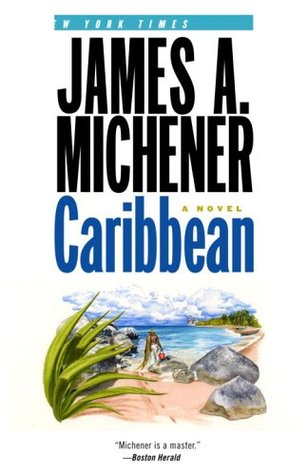
Caribbean by James Michener

Book Description from Good Reads:
In this acclaimed classic novel, James A. Michener sweeps readers off to the Caribbean, bringing to life the eternal allure and tumultuous history of this glittering string of islands. From the 1310 conquest of the Arawaks by cannibals to the decline of the Mayan empire, from Columbus’s arrival to buccaneer Henry Morgan’s notorious reign, from the bloody slave revolt on Haiti to the rise of Cuba’s Fidel Castro, Caribbean packs seven hundred dramatic years into a tale teeming with revolution and romance, authentic characters and thunderous destinies. Through absorbing, magnificent prose, Michener captures the essence of the islands in all of their awe-inspiring scope and wonder.

NY Times Review:
http://www.nytimes.com/1989/11/02/books/books-of-the-times-the-caribbean-as-lead-character-in-a-michener-novel.html

Interview with Michener:
http://articles.philly.com/1989-01-02/news/26122358_1_big-books-mari-michener-opera-book

Michener at Work Video while working on the book:
http://vimeo.com/68499106

Interview about his life:
http://www.achievement.org/autodoc/page/mic0int-1

Discussion Questions:
To Follow

Monday, September 1, 2014

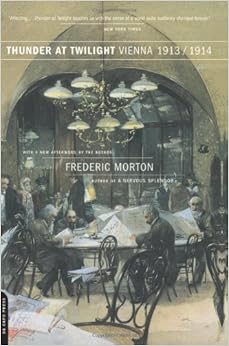
Thunder at Twilight: Vienna 1913/1914 by Frederic Morton


Summary from Good Reads:
"Thunder at Twilight is a landmark of historical vision, drawing on hitherto untapped sources to illuminate two crucial years in the life of the extraordinary city of Vienna—and in the life of the twentieth century. It was during the carnival of 1913 that a young Stalin arrived on a mission that would launch him into the upper echelon of Russian revolutionaries, and it was here that he first collided with Trotsky. It was in Vienna that the failed artist Adolf Hitler kept daubing watercolors and spouting tirades at fellow drifters in a flophouse. Here Archduke Franz Ferdinand had a troubled audience with Emperor Franz Joseph—and soon the bullet that killed the archduke would set off the Great War that would kill ten million more. With luminous prose that has twice made him a finalist for the National Book Award, Frederic Morton evokes the opulent, elegant, incomparable sunset metropolis—Vienna on the brink of cataclysm."


Article from the BBC News: "1913: When Hitler, Trotsky, Tito, Freud and Stalin all lived in the Same Place" http://www.bbc.com/news/magazine-21859771


(http://cdnstatic-2.mydestination.com/library/images/526928_638_365.jpg)

Vienna Review Interview with Morton: At Home with Language: http://www.viennareview.net/on-the-town/at-home-in-language

Discussion Questions:
1. What were the factors that made Vienna at this time the center stage for many significant persons of the century?
2. What were the different groups and who were some of these people?
3. How did the rigidity of the culture and society of Europe, especially in Austria, as mirrored in the relationship of Franz Ferdinand and his wife, help make the war inevitable?
4. What made the relationship between Franz Joseph and Franz Ferdinand so difficult?
5. Discuss the relationship between Austria - Hungary and Serbia and the issues that caused tensions between these countries.
6. Was Austria unreasonable in their ultimatum to Serbia?
7. What other action could they have taken in response to the assassinations?
8. What were factors that caused the war to be so horrific, and why was this not better anticipated?
9. How and could Franz Ferdinand have made a difference in preventing the war if he had lived?
10. Why did so many people mistakenly think that his views made war more likely?

(https://c2.staticflickr.com/8/7178/6869070033_77266ee7e7_z.jpg)

(http://www.franz-josef.cz/data/image/34181/510x400/fit.jpg)


Tuesday, February 18, 2014

The Zealot: The Life and Times of Jesus of Nazareth, by R. Aslan


Questions and Topics for Discussion from Random House:  

1. What is the difference in the ancient mind between Fact and Truth?

2. Discuss the Jewish definition of Messiah. Was this a religious or political office, or both?

3. Define the roles of the Jewish priestly hierarchy in Judea. How would a typical Galilean family like Jesus’ view this group?

4. How did Jesus’ upbringing in Nazareth lead him to a deeper understanding of social justice?

5. Discuss the Roman occupation? How did this political context shape Jesus’ outlook and actions?

6. What role did the Temple of Jerusalem play in the lives of the Jews in Jesus’ time?

7. With the above questions in mind, how do the words of the Gospels reflect Jesus’ relationship with both the Romans and the Jewish hierarchy and his call for social justice?

8. After Jesus’ death, his followers formed two separate camps based on two competing interpretations of his teachings. What are your thoughts on James and Paul?

9. How did James’ and Paul’s differences form the Christian church we know today? Why do you think Paul’s interpretation flourished?

Fox News Interview:
http://www.slate.com/blogs/the_slatest/2013/07/28/video_fox_news_lauren_green_asks_reza_aslan_why_muslim_would_be_interested.html

Interview with Jon Stewart:
http://www.huffingtonpost.com/2013/12/12/reza-aslan-jon-stewart-fox-news-interview-muslim-christianity_n_4433398.html


Friday, January 3, 2014

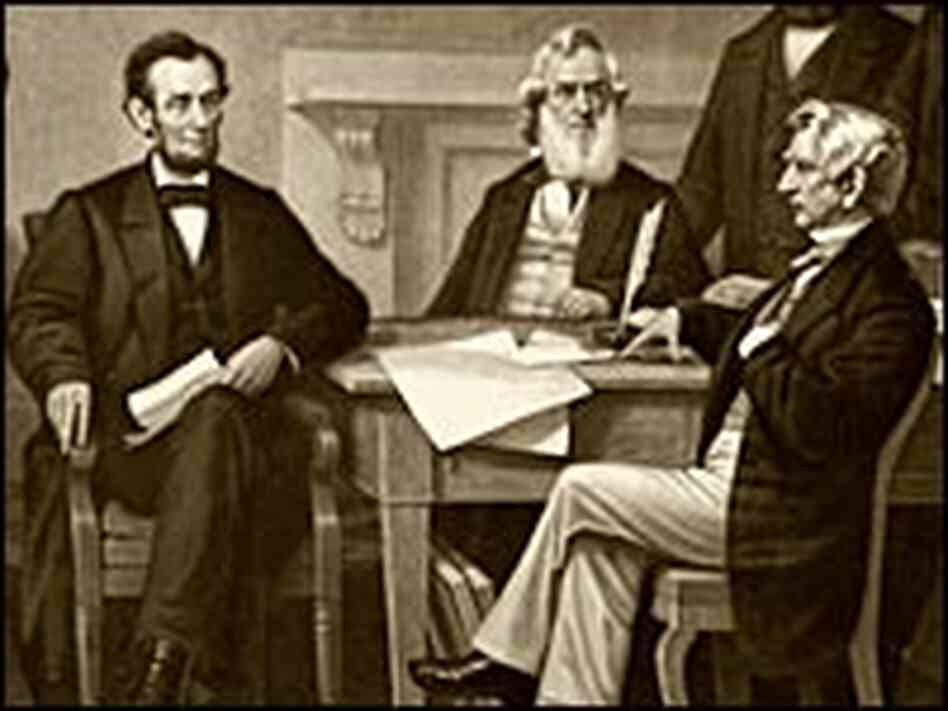
Team of Rivals: The Political Genius of Abraham Lincoln by Doris Kearns Goodwin


Summary

Acclaimed historian Doris Kearns Goodwin illuminates Lincoln's political genius in this highly original work, as the one-term congressman and prairie lawyer rises from obscurity to prevail over three gifted rivals of national reputation to become president.
On May 18, 1860, William H. Seward, Salmon P. Chase, Edward Bates, and Abraham Lincoln waited in their hometowns for the results from the Republican National Convention in Chicago. When Lincoln emerged as the victor, his rivals were dismayed and angry.
Throughout the turbulent 1850s, each had energetically sought the presidency as the conflict over slavery was leading inexorably to secession and civil war. That Lincoln succeeded, Goodwin demonstrates, was the result of a character that had been forged by life experiences that raised him above his more privileged and accomplished rivals. He won because he possessed an extraordinary ability to put himself in the place of other men, to experience what they were feeling, to understand their motives and desires.
It was this capacity that enabled Lincoln as president to bring his disgruntled opponents together, create the most unusual cabinet in history, and marshal their talents to the task of preserving the Union and winning the war.
We view the long, horrifying struggle from the vantage of the White House as Lincoln copes with incompetent generals, hostile congressmen, and his raucous cabinet. He overcomes these obstacles by winning the respect of his former competitors, and in the case of Seward, finds a loyal and crucial friend to see him through.
This brilliant multiple biography is centered on Lincoln's mastery of men and how it shaped the most significant presidency in the nation's history. 
(Provided by the author and organized by Litlovers)

Written in 2005
Publisher: Simon & Schuster
944 pp.
ISBN-13: 9780743270755


Discussion Questions

(provided by the Publisher Simon and Schuster)

1. Letters and diaries provided the greatest resource for Doris Kearns Goodwin in recreating the emotional lives of Lincoln and his cabinet. What will historians 200 years from now use to recreate our inner lives? 

2. What are the leadership lessons that our new president can learn from a study of Lincoln’s emotional intelligence and political skills? 

3. How was Abraham Lincoln able to win the Republican nomination in 1860 over his three chief rivals–Seward, Chase, and Bates–all of whom were more experienced, better educated and better known? 

4. The night before his election as president, Lincoln made the decision to put each of these three rivals into his cabinet. What led him to this decision? What does it say about his temperament? 

5. Lincoln has often been portrayed as suffering from depression all his life. Yet, Goodwin suggests that while he had a melancholy temperament, he developed constructive resources to combat his spells of sorrow. By the time he reached the presidency, Lincoln was the one who could sustain everyone else’s spirits. What were the means he used to shake off his sorrow? 

6. How different would the course of the War been if Seward had won the nomination and the presidency? 

7. President Barack Obama has said he would like to follow Lincoln’s example and surround himself with rivals and people who can question him and argue with him. What are the factors in our modern media and political culture that make it more difficult for a president to create and maintain a true team of rivals? 

8. How did Lincoln stay connected with ordinary people during his presidency? 

9. How and why did Seward’s attitude toward Lincoln shift? 

10. What role did Lincoln’s sense of humor play? Where did he develop his storytelling ability? What are a few of the most memorable stories he liked to tell? 

11. How did Lincoln’s thinking about slavery evolve over time? What led him to issue his Emancipation Proclamation? How would he answer complaints that the Proclamation did not free the slaves in the border states? How did Seward contribute to the timing of the Proclamation? 

12. How would you characterize the complex relationship between Mary and Abraham Lincoln? When they first met they seemed well suited, yet their relationship deteriorated over time. To what extent did each partner contribute to their troubles; what role did external events play? 

13. What role did Lincoln’s debates with Stephen Douglas play in his rise to prominence? How would you describe Lincoln’s attitudes toward the prospect of black equality as revealed in the debates? Why did Lincoln favor the idea of encouraging blacks to emigrate back to Africa? 

14. Why did Lincoln put up with Chase for so long, knowing that he was maneuvering against him to win the nomination in 1864? What finally undid Chase? Why did Lincoln appoint him Chief Justice? 

15. How would you describe the change in Stanton’s attitudes toward Lincoln from the time they first met as lawyers to the end? How did their opposing styles lead to positive results in the cabinet? 

16. What is the picture that emerges of George McClellan? Why did Lincoln not fire him earlier? Compare and contrast McClellan’s style with that of General Grant. 

17. Lincoln took great pride in the fact that 9 out of 10 soldiers voted for his reelection, even knowing that a vote for him meant lengthening the War since McClellan was promising a peace compromise. How did he develop such a rapport with the soldiers? 

18. How did the women in the story affect the lives and careers of the men surrounding Lincoln–Frances Seward, Kate Chase, and Julia Bates? 

19. How would you describe the complex relationship between Lincoln and Frederick Douglass? 

20. How might reconstruction have been handled differently if Lincoln had not been killed?


The Movie: Lincoln
Official Trailer from Steven Spielberg: http://www.youtube.com/watch?v=VWpMt2-Z-fc