Showing posts with label Nonfiction. Show all posts

Friday, December 30, 2016

The Longest Road by Phillip Caputo


Summary from Amazon:
"Standing on a wind-scoured island off the Alaskan coast, Philip Caputo marveled that its Inupiat Eskimo schoolchildren pledge allegiance to the same flag as the children of Cuban immigrants in Key West, six thousand miles away. And a question began to take shape: How does the United States, peopled by every race on earth, remain united? Caputo resolved that one day he'd drive from the nation's southernmost point to the northernmost point reachable by road, talking to everyday Americans about their lives and asking how they would answer his question.
So it was that in 2011, in an America more divided than in living memory, Caputo, his wife, and their two English setters made their way in a truck and classic trailer (hereafter known as "Fred" and "Ethel") from Key West, Florida, to Deadhorse, Alaska, covering 16,000 miles. He spoke to everyone from a West Virginia couple saving souls to a Native American shaman and taco entrepreneur. What he found is a story that will entertain and inspire readers as much as it informs them about the state of today's United States, the glue that holds us all together, and the conflicts that could cause us to pull apart."

Author's Sitehttp://www.philipcaputo.com/books-all/the-longest-road-2/

Video about the book from the author: https://www.youtube.com/watch?v=C3rG2v1VRi4

Interview with the author: http://www.usatoday.com/story/life/books/2013/07/24/philip-caputo-florida-to-alaska/2552079/

Review from Boston Globe: https://www.bostonglobe.com/arts/books/2013/08/01/book-review-the-longest-road-philip-caputo/PiC4rRO4sXGfJEHGVKmP2I/story.html

Discussion Questions to follow.


Wednesday, October 26, 2016

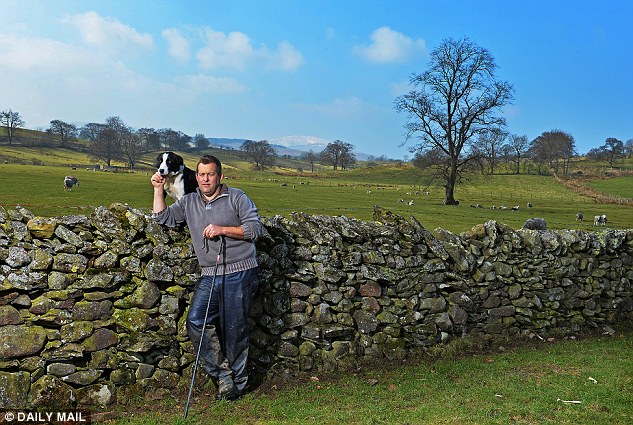
The Shepherd's Life by James Rebanks


Summary by Goodreads:
"Some people's lives are entirely their own creations. James Rebanks' isn't. The first son of a shepherd, who was the first son of a shepherd himself, he and his family have lived and worked in and around the Lake District for generations. Their way of life is ordered by the seasons and the work they demand, and has been for hundreds of years. A Viking would understand the work they do: sending the sheep to the fells in the summer and making the hay; the autumn fairs where the flocks are replenished; the gruelling toil of winter when the sheep must be kept alive, and the light-headedness that comes with spring, as the lambs are born and the sheep get ready to return to the fells."

NY Times Review:
http://www.nytimes.com/2015/06/02/books/review-the-shepherds-life-by-james-rebanks-an-english-sheep-farmer.html

Review in The Guardian: https://www.theguardian.com/books/2015/apr/04/the-shepherds-life-tale-lake-district-james-rebanks-review

Video by the Author on Youtube: https://www.youtube.com/watch?v=aKPpv9rA5Uk

Conversation with the Author: http://www.abc.net.au/local/stories/2016/05/31/4472652.htm

Discussion Questions to follow.


Saturday, July 9, 2016

A Short History of Nearly Everything by B. Bryson


Summary from Random House:
"In A Short History of Nearly Everything, the bestselling author of One Summer, confronts his greatest challenge yet: to understand—and, if possible, answer—the oldest, biggest questions we have posed about the universe and ourselves. Taking as his territory everything from the Big Bang to the rise of civilization, Bryson seeks to understand how we got from there being nothing at all to there being us. The result is a sometimes profound, sometimes funny, and always supremely clear and entertaining adventure in the realms of human knowledge, as only Bill Bryson can render it."

NY Times Reviewhttp://www.nytimes.com/2003/05/18/books/atoms-the-size-of-peas.html

Bookrags materialshttp://www.bookrags.com/studyguide-a-short-history-of-nearly-everything/#gsc.tab=0

Random House Teacher Guide:
https://www.randomhouse.com/catalog/teachers_guides/9780767908184.pdf

Author's Website: https://www.penguin.co.uk/authors/bill-bryson/1017933/

Discussion Questions from Litlovers:
1. This book presents science as a series of questions—mostly unanswered. Is this surprising to you? How was science presented to you when you were in school?

2. Bryson mentions that, several times in the past, scientists thought that all the big questions were answered. Some even believe we have reached that point today. Still others wonder if we might soon reach the limits of our intellectual ability to understand the strangeness of atomic particles or explore multiple universes. Any thoughts?

3. A major theme of the book is resistance to new scientific ideas despite solid evidence for them. Bryson gives a number of examples—the Big Bang and plate tectonics are two. What other theories faced initial rejection?
4. Follow-up to Question 3: At the same time, Bryson addresses the idea of scientists clinging to widely accepted but disproven ideas—a young earth and Ether are two that come to mind. What are some of the others in the book?
• Why do you think scientists are resistant to change?
• Are scientists any different from lay people in their resistance to change?
• What current widely held idea do you think might be disproven in the future?
5. Bryson often cites examples of global crises that may have influenced the Earth in the past—meteor strikes, salinity crisis, volcanoes, changes in solar output. How does this relate to the current consideration of global warming?

6. Follow-up to Question 5: Considering the Bryson's examples of powerful global forces beyond human control—including hurricanes, plate tectonics, earthquakes, volcanic eruptions, and ice ages—do you think differently about human ability to control what happens on earth? To what extent are we "masters" of the earth?

7. What is the connection between human beings and extinction of other species? Consider, for instance, how the dodos and passenger pigeons became extinct? Bryson makes a number of statements on the subject. What do you think?
• Over the last 50,000 years or so, wherever we have gone, animals have tended to vanish, in often astonishingly large numbers.
• The people who were most intensely interested in the world’s living things were the ones most likely to extinguish them.
• It’s an unnerving thought that we may be the living universe’s supreme achievement and it’s worst nightmare simultaneously.
•  We enjoy not only the privilege of existence but also the singular ability to appreciate it and even to make it better.
8. How has this book affected your thinking about evolution? Do you agree that evolution may be "a lottery" or that, as human beings, "we are not the culmination of anything”?

9. Do a little research into Drake’s equation for the possibility of  life on other worlds. Do you think life in the universe is inevitable or rare? Why? How about other complex (multi-cellular) life? How about intelligent life?

10. Bryson presents scientists as human beings with very human stories. Many died unhappy receiving no recognition or credit for their work. How would you feel if this happened to you? Which story touches you the most?

11. Consider the common question: “Why are there so few women scientists?” Does this book agree there is a shortage, or does it tell us why we don't hear about female scientists? Consider doing some research on Mme Lavoisier, Curie, or Franklin.

(Questions adapted from the Penguin Random House Teachers Guide.)

A Sail of Two Idiots by R. Petrillo


Summary: A couple from Arizona, with no sailing experience, sell everything, buy a sailboat and off they sail. The book is about their adventures, the many problems they encounter and the lessons they learn. They share excellent information of what to do and not do. They sail from Miami to Grenada and share about the islands, that they visit along the way.

Book blog site: http://asailoftwoidiots.blogspot.com/

Facebook page: https://www.facebook.com/ASailOfTwoIdiots/?fref=nf

Top 10 Sailing Books 2016: https://wiki.ezvid.com/best-sailing-books

Summer Reads for Sailors: http://www.practical-sailor.com/issues/37_19/features/summer_reading_for_sailors_10829-1.html

Author's Blog site: http://islandbabble.blogspot.com/

Discussion Questions:
1. What difficulties did the author and her husband experience on this sailing adventure?  How much could have been avoided, if they had been experienced?

2. Do you think, if given the choice, they would do it again?

3. What events did you find surprising? Cost of used boat and keeping it running? Broker and captain experiences? Weather? Variability of islands, ports and harbors? Anchors? Cat?

4. Do you think the book and story would persuade or dissuade others from trying a similar experience?

5. What are some of the positive experiences they had? Did they outweigh the bad, in your opinion?

6. After reading this book, which islands would you like to visit?


Monday, April 11, 2016

Season at the Point: The Birds and Birders of Cape May by J. Connor (1994)


**This book was recommended to us from a friend, who is active in the FL Audubon Society.

Summary from Amazon:
Cape May Point, New Jersey, is home to a natural phenomenon of stunning proportions. Each autumn millions of migrating birds converge here on their annual flight to wintering grounds as far away as Brazil and Peru. Season at the Point, the rich and telling story of the birds and birders of Cape May, evokes the sense of mystery and excitement that pervades the Cape as birders gather to count owls by the hundreds, hawks by the tens of thousands, and shorebirds and songbirds by the hundreds of thousands.


Available on Google Books:
Discussion Questions:
1. Is it possible to really understand migration patterns? What information would be needed to obtain this?
2. What were the some of the different approaches to birding amongst the birders, such as Al Nicholson versus others?
3. What role does banding play? To what degree does banding answer the questions to migration? What are some of its limitations?
4. Discuss the variability and difficulties in counting birds. Why was this type of information not considered to be solid data historically? 
5. Discuss the role of migration, orientation ability and timing and what it takes to successfully migrate.
6. Discuss the different birders, who they are and what perspectives do they bring.
7. How did the radar based data generated by the Clemson researchers change the way the hawk migration was viewed?
8. What impact has the hawk platform, bird counts and other birding events had on Cape May?


A 25th Anniversary of the writing of the book was celebrated on May 21, 2016 at The Grand Hotel in Cape May. The author did a reading and then led a panel discussion including several birding experts, who were highlighted in the book, including Pete Dunn, Paul Kerlinger, Jeff Boulton, and 
Pat and Clay Sutton. 


Wednesday, March 30, 2016

Settled in the Wild: Notes from the Edge of Town by Susan Shetterly


Summary from Amazon: 
Whether we live in cities, suburbs, or villages, we are encroaching on nature, and it in one way or another perseveres. Naturalist Susan Shetterly looks at how animals, humans, and plants share the land―observing her own neighborhood in rural Maine. She tells tales of the locals (humans, yes, but also snowshoe hares, raccoons, bobcats, turtles, salmon, ravens, hummingbirds, cormorants, sandpipers, and spring peepers). She expertly shows us how they all make their way in an ever-changing habitat. 

Author's website: http://www.susanhandshetterly.com/

Reviews: 
http://www.maineboats.com/print/issue-109/book-review-109-settled-in-the-wild
https://bookpage.com/reviews/6312-susan-hand-shetterly-settled-wild#.VvvOERIrKRs

Discussion questions by Heidi:
1. Discuss the format of the book and writing style. How does she compare to other nature writers such as Annie Dillard and Bernd Heinrich?
2. Shetterly has cared for many injured animals. Have you had any of your own experiences? 
3. Which story did you especially enjoy reading about?
4. Where does the author fit into the community?
5. What changes does she observe in her community and in the environment over time? What have you observed in your own community?


Sunday, January 24, 2016

I'm Feeling Lucky: The Confessions of Google Employee Number 59 by Douglas Edwards


Summary from Amazon:
In its infancy, Google embraced extremes—endless days fueled by unlimited free food, nonstop data-based debates, and blood-letting hockey games. The company’s fresh-from-grad-school leaders sought more than old notions of success; they wanted to make all the information in the world available to everyone—instantly. Google, like the Big Bang, was a singularity—an explosive release of raw intelligence and unequaled creative energy—and while others have described what Google accomplished, no one has explained how it felt to be a part of it. Until now.

As employee number 59, Douglas Edwards was a key part of Google’s earliest days. Experience the unnerving mix of camaraderie and competition as Larry Page and Sergey Brin create a famously nonhierarchical structure, fight against conventional wisdom, and race to implement myriad new features while coolly burying broken ideas. I’m Feeling Lucky captures the self-created culture of the world’s most transformative corporation and offers unique access to the emotions experienced by those who virtually overnight built one of the world’s best-known brands.

Interview with the author: 


Discussion Questions: to follow


Monday, November 16, 2015

Dreams from My Father by Barack Obama


Mini-Summary from Litlovers: Dreams from My Father tells the story of Obama’s struggle to understand the forces that shaped him as the son of a black African father and white American mother—a struggle that takes him from the American heartland to the ancestral home of his great-aunt in the tiny African village of Alego.

NY Times Review: A Promise of Redemption:
http://www.nytimes.com/1995/08/06/books/review/06obama-dreams.html

Interview from 1995 regarding the book:
https://www.youtube.com/watch?v=Rx_XS4s6aA4

Discussion Questions from LitLovers:
1. Describe the difficulties Obama had as a child—not fitting in with white children and fearing social "out-casts."
2. Is it possible for any individual born of two ethnic origins to find a society in which he or she truly belongs? Think of recent authors who have struggled with similar issues: Amy Tan (Chinese), Jhumpa Lahiri (Indian), Louise Erdrich (Native American). Also consider the classics of African-American writers like Ralph Ellison's Invisible Man and Richard Wright's Native Son, Toni Morrison's Beloved.
3. Discuss Obama's family. What about his mother—would you have liked more attention paid to her in this work? Also consider his grandparents and they role they played in his life.
4. When he makes his trip to Kenya, what does he come to understand about his father—and his own heritage.
5. Do you feel Obama's attitude toward the all-white culture is one of blame, acceptance, resignation? Or something else?
6. Ultimately, Obama's memoir is a coming-of-age story in which a young man who straddles two cultures seeks his identity in the adult world. How—or how well—does he succeed? What conclusions does he reach?
7. Talk about his work as a community social worker on Chicago's south side. What does he learn or come to realize about his role in the African-American community?
8. Knowing now, as we do, of Obama's election as President of the United States, how do you view the primary events in his memoirs? In what ways have they shaped his political success and his political views?

Sunday, September 27, 2015

The Bees by Laline Paull


Summary:
This entertaining and creatively written story takes you deep into the bee hive, following the ever unique Flora 717 sanitation bee and her amazing adventures and unusual life.  She takes on the role of all the different bees, from feeding the larvae babies, to being a forager, meeting the queen and then doing the unthinkable.

Author's sitehttp://www.lalinepaull.com/the-bees/synopsis/

NY Times Review: "Hive Mentality" -
http://www.nytimes.com/2014/05/25/books/review/the-bees-by-laline-paull.html?_r=0

The Guardian Reviewhttp://www.theguardian.com/books/2014/may/21/bees-laline-paull-fantasy-novel-review

Interview with the author by Bookanista: http://bookanista.com/laline-paull/

Discussion Questions:
1. What are some of the ways the book informs how bees function. How did the author help you visual, feel and understand this in new ways.
2. What genre would you place this book?
3. Flora is often described as heroic. Why and how?
4. How does Flora's knowledge of the archives help her and the hive?
5. How do the bees view of the world beyond and how do they respond and interact with it?
6. How does the the life of the bees in this story diverge from the true life of bees?
7. How is Flora different from the other bees?
8. Would agree that this a "Cinderella" story? How?
9. Would you recommend this book for a book prize and why?
10. Has this book inspired you to become a beekeeper?

Friday, August 28, 2015

The Genius of Dogs by Brian Hare and Vanessa Woods


Summary: Brian Hare, Founder of Duke Canine Cognition Center, and his colleague, V. Woods, present their findings at the center and also review of the literature regarding dog's intelligence, their connection to humans as well about what it is to be a genius!

Interviews: 


Review: 

b." The Genius of Dogs and The Hidden Lives of Wolves" by M. Bekoff, Psychology https://www.psychologytoday.com/blog/animal-emotions/201302/the-genius-dogs-and-the-hidden-life-wolves


Suggested additional reading - a story that perhaps inspired Brian Hare? : Kurt Vonnegut, "Welcome to the Monkey House: Tom Edison's Shaggy Dog"

(http://www.sciencebuddies.org/Files/2616/3/MamBio_img013.jpg)


Our Discussion Questions:
1. What are the advantages of natural selection versus self-domestication for wolves/dogs? What are roles for each of these? See page 105 for discussion, including about Bonobos, the dog of Apes.
2. How can friendliness and socialization contribute to survival for all species? See pages 112-114.
3. After reading this book, do you think humans are more similar to bonobos or chimpanzees, behaviorally? 
4. What impact can self-domestication have on a ecosystem?
5. How do both self-domestication and assisted domestication contribute to the development of dogs?
Who domesticated whom?
6. Compare the social structures of wolves versus dogs?
7. How important was the Russian experiment of domesticating silver foxes for understanding dog domestication?
8. Which domesticated animals share some of the same relationship characteristics as dogs with humans?  Which are more similar and which are less so?


Saturday, July 11, 2015

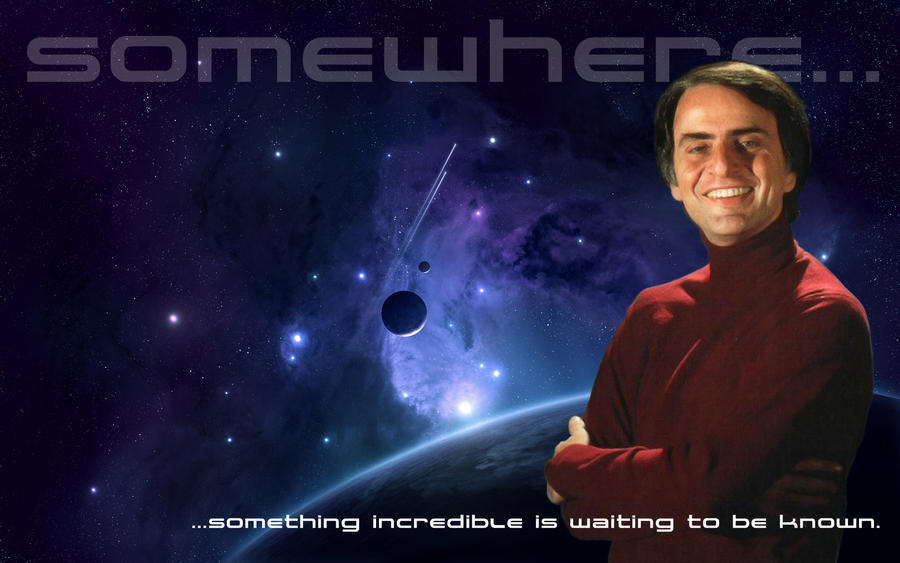
Cosmos by Carl Sagan

Summary from Good Reads:
Cosmos has 13 heavily illustrated chapters, corresponding to the 13 episodes of the Cosmos television series. In the book, Sagan explores 15 billion years of cosmic evolution and the development of science and civilization. Cosmos traces the origins of knowledge and the scientific method, mixing science and philosophy, and speculates to the future of science. The book also discusses the underlying premises of science by providing biographical anecdotes about many prominent scientists throughout history, placing their contributions into the broader context of the development of modern science.

The book covers a broad range of topics, comprising Sagan's reflections on anthropological, cosmological, biological, historical, and astronomical matters from antiquity to contemporary times. Sagan reiterates his position on extraterrestrial life—that the magnitude of the universe permits the existence of thousands of alien civilizations, but no credible evidence exists to demonstrate that such life has ever visited earth.

Interview with Rolling Stonehttp://www.rollingstone.com/culture/features/the-cosmos-19801225

Smithsonian Article: " Why Carl Sagan is Truly Irreplaceable." March 2014:
http://www.smithsonianmag.com/science-nature/why-carl-sagan-truly-irreplaceable-180949818/?no-ist

Interview with Ted Turnerhttps://www.youtube.com/watch?v=DV-YNO4ZeTM

National Geographic Article: http://channel.nationalgeographic.com/cosmos-a-spacetime-odyssey/articles/carl-sagan-and-the-cosmos-legacy/

Original Series on YouTube: http://www.openculture.com/2014/03/carl-sagans-original-cosmos-series-on-youtube.html or https://www.youtube.com/playlist?list=PLBA8DC67D52968201


Bill Moyer's Interview with Neil deGrasse about the new Cosmos Serieshttp://billmoyers.com/episode/neil-degrasse-tyson-on-the-new-cosmos/

Discussion Questions:
A. From Athena: http://www.athenalearning.com/programs/cosmos/discussion-guide
B: Questions for the 2 series: http://phyz.org/cosmos/


Saturday, June 27, 2015

A Year in Provence by Peter Mayle


Summary:
The British author shares his experiences and adventures, month by month, about his new life in Provence in the Luberon area after purchasing a 200 year old stone farm house. It's witty, funny and he captures the essences of this unique area.


Discussion Questions:
1. How well did Mayle's frequent trips to Provence as a tourist prepare him for the reality of residing there? What were some of the initial surprises he and his wife encountered?
2. How does the form of the book--a month-by-month journal--enhance the immediacy of Mayle's observations and draw the reader into his experiences? How do the changing seasons mirror Mayle's own adjustment to his new environment?
3. Mayle writes that neighbors take on an importance in the country that they don't have in the city [p. 6]. How do his relationships with Faustin, Massot, Menicucci, and the other local workmen reflect this? Does the fact that Mayle is a foreigner influence the way he is treated? How do the men working on his house endear themselves to Mayle, despite his continuing frustrations with their casual attitude about completing the job?
4. Mayle notes there are "two areas of endeavor in which France leads the world-- bureaucracy and gastronomy" [p. 23]. What particular characteristics of the French does Mayle bring to light in stories about the bureaucracy involved in buying the house, a car, insurance, and other necessities?
5. The influx of tourists begins in May and reaches a high point in August. How does his status as a resident affect Mayle's attitudes about friends and acquaintances who, as he himself once did, try to take in everything Provence has to offer during a short holiday? Does he learn things about himself and the life he has chosen by looking through the eyes of visitors? To what extent are his own perceptions influenced by his English upbringing?
6. How does the Mayles' party for the workmen and their wives, as well as their own Christmas dinner at a local restaurant, put the events of the year into context and serve as a coda to the book as a whole?
(Questions issued by publisher.) 

Monday, April 13, 2015

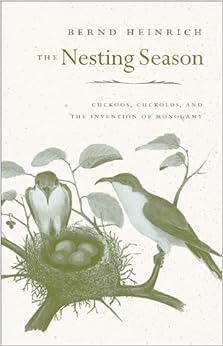
The Nesting Season by Bernd Heinrich


Summary: Bernd Heinrich provides an in-depth study of bird's songs, mating rituals, sex roles, predation, migration, and nesting behaviors in this fascinating and engaging book. He discusses in detail the variety of strategies birds use to reproduce and its complexities. There are some surprising and unexpected twists in bird romancing. It includes beautiful photos and the author's watercolors. It's a great read for Spring.

Harvard Press Book Information including Reviews, Table of Contents and More: http://www.hup.harvard.edu/catalog.php?isbn=9780674061934

Saint Paul Audubon - Review:
http://www.saintpaulaudubon.org/education/nesting-season-cuckoos-cuckolds-and-invention-of-monogamy

NPR Interview: "Nesting with a Naturalist":
http://www.npr.org/templates/story/story.php?storyId=127240669

Interview on Science Friday with Ira:
http://www.sciencefriday.com/segment/05/28/2010/naturalist-bernd-heinrich.html

Northern Woodlands Site: Great Article and Photos about Nests: "Which Bird Made That Nest?"
http://northernwoodlands.org/articles/article/which-bird-made-that-nest/


Sunday, April 12, 2015

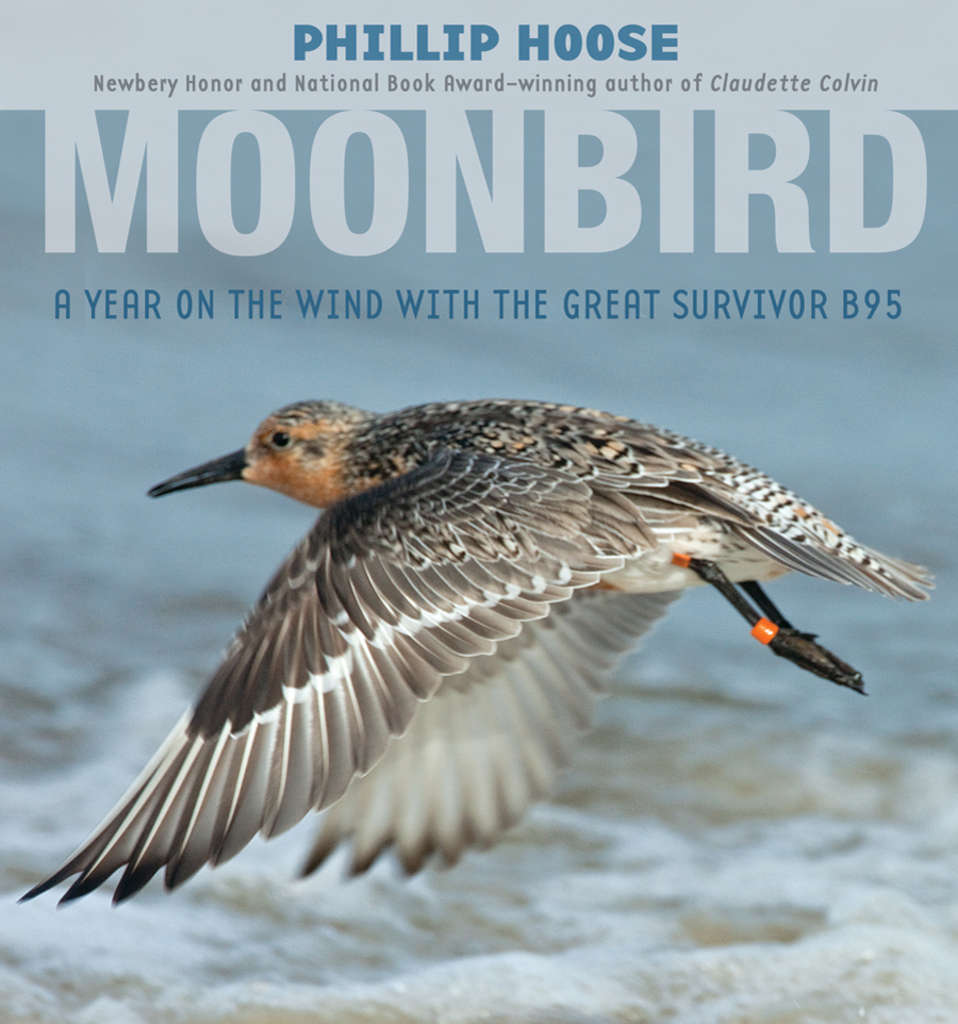
Moonbird by Phillip Hoose


Summary:
This is the incredible story about B95, a male rufa Red knot, who flies over 18,000 miles per year from Tierra del Fuego to his breeding grounds in the Canadian Arctic and back again. His species has declined by 80% due to lost habitat and food availability. This book is about his life and questions why and how he has survived for over 20 years. Find out why he is called "Moonbird".

Review by The Horn Book: http://www.hbook.com/2012/08/choosing-books/review-of-the-week/review-of-moonbird-a-year-on-the-wind-with-the-great-survivor-b95/

Phillip Hoose's Website: http://www.philliphoose.com/books/moonbird/

Nature Conservancy Article: http://www.nature.org/ourinitiatives/regions/northamerica/canada/b95-the-toughest-four-ounces-of-life.xml

Teacher's Guidehttp://images.macmillan.com/folio-assets/teachers-guides/9780374304683TG.pdf


Friday, September 19, 2014

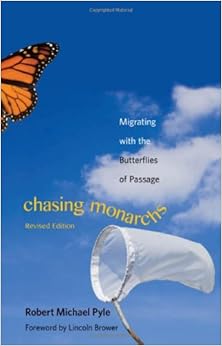
Chasing Monarchs: Migrating with the Butterflies of Passage by Robert Michael Pyle

Summary from Amazon:
Although no one had ever followed North American monarch butterflies on their annual southward journey to Mexico and California, in the 1990s there were well-accepted assumptions about the nature and form of the migration. But to Robert Michael Pyle, a naturalist with long experience in monarch conservation, the received wisdom about the butterflies’ long journey just didn’t make sense. In the autumn of 1996 he set out to uncover the facts, to pursue the tide of “cinnamon sailors” on their long, mysterious flight.
Chasing Monarchs chronicles Pyle’s 9,000-mile journey to discover firsthand the secrets of the monarchs’ annual migration. Part road trip, part outdoor adventure, and part natural history study, Pyle’s book overturns old theories and provides insights both large and small regarding monarch butterflies, their biology, and their spectacular migratory travels. Since the book’s first publication, its controversial conclusions have been fully confirmed, and monarchs are better understood than ever before. The Afterword for this volume includes not only updated information on the myriad threats to monarch butterflies, but also various efforts under way to ensure the future of the world’s most amazing butterfly migration.


Review from Yale University Press: 
http://yalepress.yale.edu/yupbooks/reviews.asp?isbn=9780300203875

Documentary: Tracking the Monarch Migration from Nova: 
http://www.pbs.org/wgbh/nova/nature/monarch-migration.html
(http://wingedbeautydotcom.files.wordpress.com/2012/01/zablowbutt_first60-13_lrge.jpg)

Robert Michael Pyle's Facebook Page
https://www.facebook.com/pages/Robert-Michael-Pyle/293832101900

Other Books by the author: 
http://www.villagebooks.com/event/robert-michael-pyle-5/10/14

Recent Reading at Penn State, September 4, 2014: 
http://psbehrend.psu.edu/news-events/events/september-4-robert-michael-pyle-reading

ID tools for Identifying Butterflies and Moths:
http://www.butterfliesandmoths.org/identification_tools

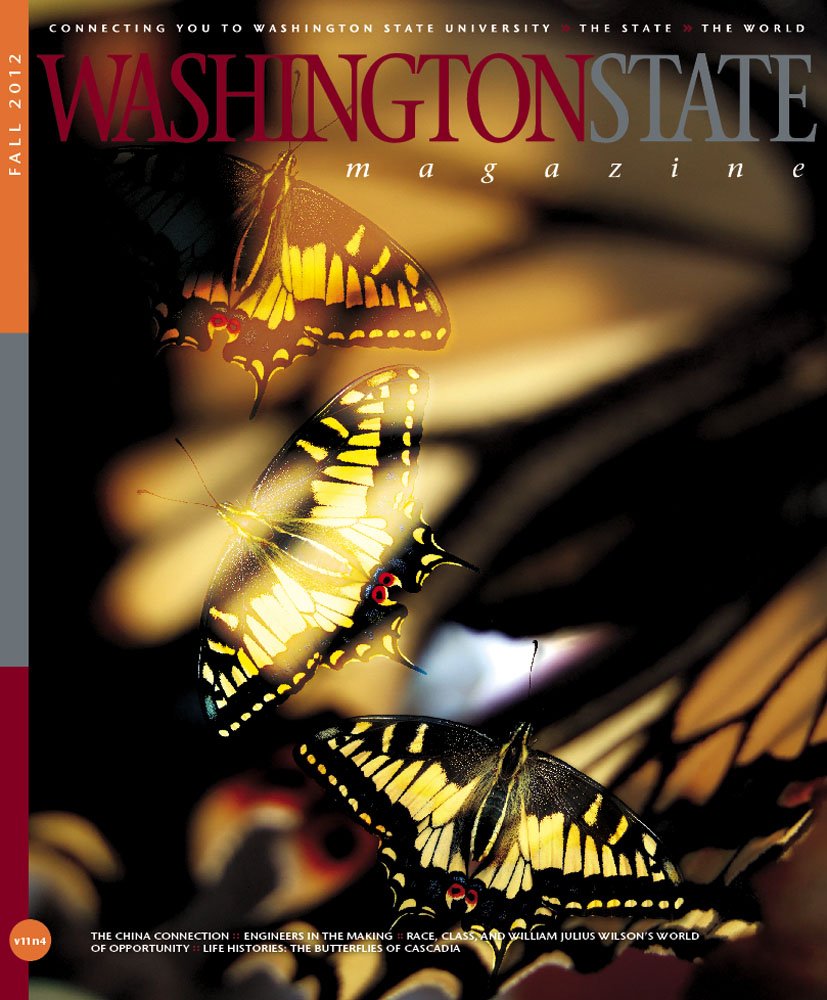
In the Washington State Magazine: Life Histories of the Butterflies of Cascadia:
http://wsm.wsu.edu/s/index.php?id=980


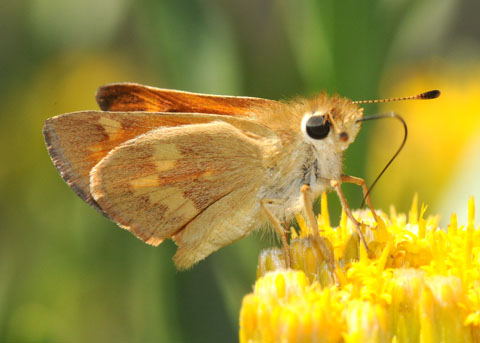
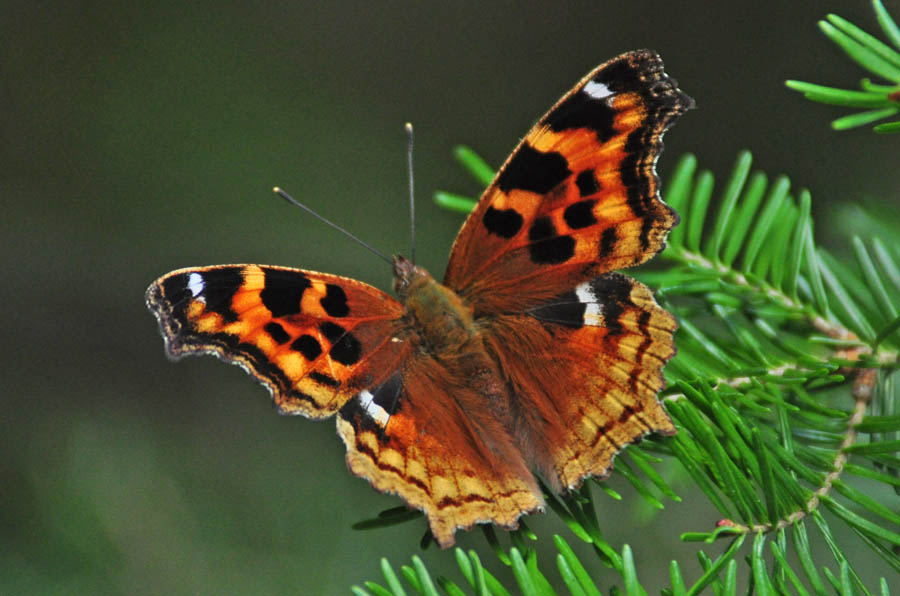
Some mentioned Butterflies of the West Coast of US:
Woodland Skipper:
(http://nathistoc.bio.uci.edu/lepidopt/hesper/DSC_0557b.jpg)
Clouded Sulphur:
(http://www.butterfliesandmoths.org/sites/default/files/imagecache/gallery_for_colorbox/species_images/Colias_philodice2.jpg)

Compton tortoiseshell: 

(http://www.thehibbitts.net/troy/photo/lepidoptera/compton.tortoiseshell.mn.cook.10.1a.jpg)

Becker's White: 
(http://bugguide.net/images/raw/6ZKL1Z8L1Z4L2Z5HZR5L9ZILAZ2HBH8H2ZZLNZEH9Z5LRR4HGZQL1ZEHFHXLGZ7LNZILLR8L9ZMLFH.jpg)


*   *   *   *   *   *   *   *   *   *   * 


Interview with Robert Michael Pyle: 
http://podcastcafe.org/radiofreefundi/files/Bob-Pyle-Butterfly-Big-Year.html

Discussion Questions to Follow:
1. What predators do monarchs encounter along their journey? See pp 35, 41, 48
2. What plants are similar to milkweed? See page 26.
3. When did migration actually start? Discuss the "Columbus Hypothesis", page 50.
4. Discuss other things that challenge monarchs along the route, including weather, difficult water crossings, etc. 
5. Discuss tagging of monarchs.
6. How have the changes in the landscape including damming effected migration patterns?
7. How did the author's theories about monarch migration influence research and lead to its confirmation?


Monday, September 1, 2014

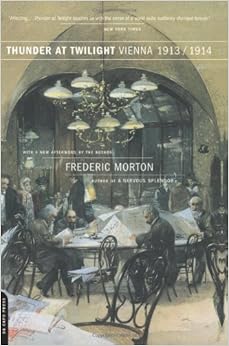
Thunder at Twilight: Vienna 1913/1914 by Frederic Morton


Summary from Good Reads:
"Thunder at Twilight is a landmark of historical vision, drawing on hitherto untapped sources to illuminate two crucial years in the life of the extraordinary city of Vienna—and in the life of the twentieth century. It was during the carnival of 1913 that a young Stalin arrived on a mission that would launch him into the upper echelon of Russian revolutionaries, and it was here that he first collided with Trotsky. It was in Vienna that the failed artist Adolf Hitler kept daubing watercolors and spouting tirades at fellow drifters in a flophouse. Here Archduke Franz Ferdinand had a troubled audience with Emperor Franz Joseph—and soon the bullet that killed the archduke would set off the Great War that would kill ten million more. With luminous prose that has twice made him a finalist for the National Book Award, Frederic Morton evokes the opulent, elegant, incomparable sunset metropolis—Vienna on the brink of cataclysm."


Article from the BBC News: "1913: When Hitler, Trotsky, Tito, Freud and Stalin all lived in the Same Place" http://www.bbc.com/news/magazine-21859771


(http://cdnstatic-2.mydestination.com/library/images/526928_638_365.jpg)

Vienna Review Interview with Morton: At Home with Language: http://www.viennareview.net/on-the-town/at-home-in-language

Discussion Questions:
1. What were the factors that made Vienna at this time the center stage for many significant persons of the century?
2. What were the different groups and who were some of these people?
3. How did the rigidity of the culture and society of Europe, especially in Austria, as mirrored in the relationship of Franz Ferdinand and his wife, help make the war inevitable?
4. What made the relationship between Franz Joseph and Franz Ferdinand so difficult?
5. Discuss the relationship between Austria - Hungary and Serbia and the issues that caused tensions between these countries.
6. Was Austria unreasonable in their ultimatum to Serbia?
7. What other action could they have taken in response to the assassinations?
8. What were factors that caused the war to be so horrific, and why was this not better anticipated?
9. How and could Franz Ferdinand have made a difference in preventing the war if he had lived?
10. Why did so many people mistakenly think that his views made war more likely?

(https://c2.staticflickr.com/8/7178/6869070033_77266ee7e7_z.jpg)

(http://www.franz-josef.cz/data/image/34181/510x400/fit.jpg)