Showing posts with label Fiction. Show all posts

Wednesday, August 10, 2016

The Cape by Charles Whitecar Miskelly


Summary by Amazon:
"A British sailor is shipwrecked in the early 17th century off the coast of what is now Cape May, New Jersey, where he befriends and becomes an honorary member of the Lenni-Lenape tribe, the Cape's native inhabitants. Under the tightening grip of the white settlers, McJack finds himself in the unusual position of leading his tribe to safety. This riveting, beautiful story showcases themes of love, honor, and duty while offering a morsel of little-known East Coast history. It also reveals a chapter in mid-20th-century publishing practices, as a renowned publisher of the era was primed and ready to market the author Charles Whitecar Miskelly as another Rudyard Kipling, Oscar Wilde, or Jack London, if only Miskelly himself had understood that the typical editorial policies of the time were not necessarily diametrically opposed to his artistic vision. Decades later, this lost treasure of historical adventure is ready to be shared with the world."


Exit Zero Publishers: They have super fun stores and an excellent Indian Restaurant in West Cape May


Discussion Questions being developed:
(From the Philly Mag. story above) 1. Carlisle doesn’t know how his grandfather learned to write, or how he crafted a story about a group that didn’t even admit its own existence. Did he work with Native Americans at the shipyard? Did he have friends he visited on his long solo bike rides from Bricksboro to Cape May? Was he himself a descendant of American Indians? His ancestors arrived in the United States around the time of John McJack’s shipwreck. What do you think?
2. Where does this story take place? View the maps for clues?
3. What are some of your favorite deeds that McJack does?
4. 
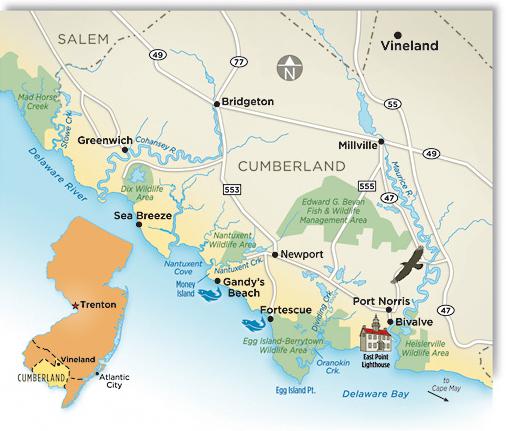

Maurice River Bluffs (Photo by Mike Crewe)

(Cape May Point)


Sunday, April 10, 2016

All the Light We Cannot See by A. Doerr


Summary from Amazon:
WINNER OF THE PULITZER PRIZE
From the highly acclaimed, multiple award-winning Anthony Doerr, the beautiful, stunningly ambitious instant New York Times bestseller about a blind French girl and a German boy whose paths collide in occupied France as both try to survive the devastation of World War II.

Marie-Laure lives with her father in Paris near the Museum of Natural History, where he works as the master of its thousands of locks. When she is six, Marie-Laure goes blind and her father builds a perfect miniature of their neighborhood so she can memorize it by touch and navigate her way home. When she is twelve, the Nazis occupy Paris and father and daughter flee to the walled citadel of Saint-Malo, where Marie-Laure’s reclusive great-uncle lives in a tall house by the sea. With them they carry what might be the museum’s most valuable and dangerous jewel.

In a mining town in Germany, the orphan Werner grows up with his younger sister, enchanted by a crude radio they find. Werner becomes an expert at building and fixing these crucial new instruments, a talent that wins him a place at a brutal academy for Hitler Youth, then a special assignment to track the resistance. More and more aware of the human cost of his intelligence, Werner travels through the heart of the war and, finally, into Saint-Malo, where his story and Marie-Laure’s converge.

Doerr’s “stunning sense of physical detail and gorgeous metaphors” (San Francisco Chronicle) are dazzling. Deftly interweaving the lives of Marie-Laure and Werner, he illuminates the ways, against all odds, people try to be good to one another. Ten years in the writing, a National Book Award finalist, All the Light We Cannot See is a magnificent, deeply moving novel from a writer “whose sentences never fail to thrill” (Los Angeles Times).

NPR Review: http://www.npr.org/2014/05/10/310459898/a-fractured-tale-of-time-war-and-a-really-big-diamond


Author's Website: http://www.anthonydoerr.com/

Interview with Author by National Book:
http://www.nationalbook.org/nba2014_f_doerr_interv.html#.VwquNRMrKRs

Interview with Simon and Schuster:
https://www.youtube.com/watch?v=IYBK3Lsx7aI

Interview with Scribner Magazine:
http://www.scribnermagazine.com/2014/10/anthony-doerr-all-the-light-we-cannot-see/

Reading Group Guide:
http://books.simonandschuster.com/All-the-Light-We-Cannot-See/Anthony-Doerr/9781476746586/reading_group_guide

Discussion Questions from Simon and Schuster:
1. The book opens with two epigraphs. How do these quotes set the scene for the rest of the book? Discuss how the radio plays a major part in the story and the time period. How do you think the impact of the radio back then compares with the impact of the Internet on today’s society?

2. The narration moves back and forth both in time and between different characters. How did this affect your reading experience? How do you think the experience would have been different if the story had been told entirely in chronological order?

3. Whose story did you enjoy the most? Was there any character you wanted more insight into?

4. When Werner and Jutta first hear the Frenchman on the radio, he concludes his broadcast by saying “Open your eyes and see what you can with them before they close forever” (pages 48–49), and Werner recalls these words throughout the book (pages 86, 264, and 409). How do you think this phrase relates to the overall message of the story? How does it relate to Madame Manec’s question: “Don’t you want to be alive before you die?” (page 270)?

5. On page 160, Marie-Laure realizes “This . . . is the basis of his fear, all fear. That a light you are powerless to stop will turn on you and usher a bullet to its mark.” How does this image constitute the most general basis of all fear? Do you agree?

6. Reread Madame Manec’s boiling frog analogy on page 284. Etienne later asks Marie-Laure, “Who was supposed to be the frog? Her? Or the Germans?” (page 328) Who did you think Madame Manec meant? Could it have been someone other than herself or the Germans? What does it say about Etienne that he doesn’t consider himself to be the frog?

7. On page 368, Werner thinks, “That is how things are . . . with everybody in this unit, in this army, in this world, they do as they’re told, they get scared, they move about with only themselves in mind. Name me someone who does not.” But in fact many of the characters show great courage and selflessness throughout the story in some way, big or small. Talk about the different ways they put themselves at risk in order to do what they think is right. What do you think were some shining moments? Who did you admire most?

8. On page 390, the author writes, “To shut your eyes is to guess nothing of blindness.” What did you learn or realize about blindness through Marie-Laure’s perspective? Do you think her being blind gave her any advantages?

9. One of Werner’s bravest moments is when he confronts von Rumpel: “All your life you wait, and then it finally comes, and are you ready?” (page 465) Have you ever had a moment like that? Were you ready? What would you say that moment is for some of the other characters?

10. Why do you think Marie-Laure gave Werner the little iron key? Why might Werner have gone back for the wooden house but left the Sea of Flames?

11. Von Rumpel seemed to believe in the power of the Sea of Flames, but was it truly a supernatural object or was it merely a gemstone at the center of coincidence? Do you think it brought any protection to Marie-Laure and/or bad luck to those she loved?

12. When Werner and Marie-Laure discuss the unknown fate of Captain Nemo at the end of Twenty Thousand Leagues Under the Sea, Marie-Laure suggests the open-endedness is intentional and meant to make us wonder (page 472). Are there any unanswered questions from this story that you think are meant to make us wonder?

13. The 1970s image of Jutta is one of a woman deeply guilt-ridden and self-conscious about her identity as a German. Why do you think she feels so much guilt over the crimes of others? Can you relate to this? Do you think she should feel any shame about her identity?

14. What do you think of the author’s decision to flash forward at the end of the book? Did you like getting a peek into the future of some of these characters? Did anything surprise you?

15. Aleksandr Solzhenitsyn once wrote that “the line dividing good and evil cuts through the heart of every human being.” All the Light We Cannot See is filled with examples of human nature at its best and worst. Discuss the themes of good versus evil throughout the story. How do they drive each other? What do you think are the ultimate lessons that these characters and the resolution of their stories teach us?


Sunday, September 27, 2015

The Bees by Laline Paull


Summary:
This entertaining and creatively written story takes you deep into the bee hive, following the ever unique Flora 717 sanitation bee and her amazing adventures and unusual life.  She takes on the role of all the different bees, from feeding the larvae babies, to being a forager, meeting the queen and then doing the unthinkable.

Author's sitehttp://www.lalinepaull.com/the-bees/synopsis/

NY Times Review: "Hive Mentality" -
http://www.nytimes.com/2014/05/25/books/review/the-bees-by-laline-paull.html?_r=0

The Guardian Reviewhttp://www.theguardian.com/books/2014/may/21/bees-laline-paull-fantasy-novel-review

Interview with the author by Bookanista: http://bookanista.com/laline-paull/

Discussion Questions:
1. What are some of the ways the book informs how bees function. How did the author help you visual, feel and understand this in new ways.
2. What genre would you place this book?
3. Flora is often described as heroic. Why and how?
4. How does Flora's knowledge of the archives help her and the hive?
5. How do the bees view of the world beyond and how do they respond and interact with it?
6. How does the the life of the bees in this story diverge from the true life of bees?
7. How is Flora different from the other bees?
8. Would agree that this a "Cinderella" story? How?
9. Would you recommend this book for a book prize and why?
10. Has this book inspired you to become a beekeeper?

Thursday, March 12, 2015

The Alchemist by Paulo Coehlo


Summary from Amazon:
It's a story about Santiago, an Andalusian shepherd boy who yearns to travel in search of a worldly treasure as extravagant as any ever found.
The story of the treasures Santiago finds along the way teaches us, as only a few stories can, about the essential wisdom of listening to our hearts, learning to read the omens strewn along life's path, and, above all, following our dreams.

Reviews:
From the NYTimes: "Writing in a Global Language": 

Interview with the author:


Author's Blog: 

Discussion Questions from Litlovers:
1. At the start of his journey, when Santiago asks a gypsy woman to interpret his dream about a treasure in the Egyptian pyramids, she asks for one tenth of the treasure in return. When Santiago asks the old man to show him the path to the treasure, the old man requests one tenth of his flock as "payment." Both payments represent a different price we have to pay to fulfill a dream; however, only one will yield a true result. Which payment represents false hope? Can you think of examples from your own life when you had to give up something to meet a goal and found the price too high?
2. Paulo Coelho once said that alchemy is all about pursuing our spiritual quest in the physical world as it was given to us. It is the art of transmuting the reality into something sacred, of mixing the sacred and the profane. With this in mind, can you define your Personal Legend? At what time in your life were you first able to act on it? What was your "beginner's luck"? Did anything prevent you from following it to conclusion? Having read The Alchemist, do you know what inner resources you need to continue the journey?
3. One of the first major diversions from Santiago's journey was the theft of his money in Tangiers, which forced him into taking a menial job with the crystal merchant. There, Santiago learned many lessons on everything from the art of business to the art of patience. Of all these, which lessons were the most crucial to the pursuit of his Personal Legend?
4. When he talked about the pilgrimage to Mecca, the crystal merchant argued that having a dream is more important than fulfilling it, which is what Santiago was trying to do. Do you agree with Santiago's rationale or crystal merchant's?
5. The Englishman, whom Santiago meets when he joins the caravan to the Egyptian pyramids, is searching for "a universal language, understood by everybody." What is that language? According to the Englishman, what are the parallels between reading and alchemy? How does the Englishman's search for the alchemist compares to Santiago's search for a treasure? How did the Englishman and Santiago feel about each other?
6. The alchemist tells Santiago "you don't have to understand the desert: all you have to do is contemplate a simple grain of sand, and you will see in it all the marvels of creation." With this in mind, why do you think the alchemist chose to befriend Santiago, though he knew that the Englishman was the one looking for him? What is the meaning of two dead hawks and the falcon in the oasis? At one point the alchemist explains to Santiago the secret of successfully turning metal into gold. How does this process compare to finding a Personal Legend?
7. Why did Santiago have to go through the dangers of tribal wars on the outskirts of the oasis in order to reach the pyramids? At the very end of the journey, why did the alchemist leave Santiago alone to complete it?
8.Earlier in the story, the alchemist told Santiago "when you possess great treasures within you, and try to tell others of them, seldom are you believed." At the end of the story, how did this simple lesson save Santiago's life? How did it lead him back to the treasure he was looking for?
(Questions issued by publisher.)


Friday, January 30, 2015

The Slip by Katie Smith Matison


Summary from Amazon:
In 1920, the Byzantium sank off the coast of St. Thomas with its precious cargo of emeralds. Underwriters of Lloyd’s of London took ownership of the sunken hull and whatever emeralds might someday be salvaged. Nearly a century later, treasure recovery becomes big business. Salvage companies and bounty hunters comb the ocean floor for lost gems. As widow Brandy Blake soon finds out, treasure recovery isn’t just lucrative, it’s also dangerous.
When Brandy returns to her native New Orleans to rebuild her life after her husband dies while searching for Byzantium’s lost emerald’s, she realizes that he recovered more jewels than he every let on.  But Brandy isn’t the only one who knows about her husband’s stash. Recov, an unscrupulous salvage company, wants the emeralds, and the award money that comes with it.
Brandy’s daughter, Rene, become blackmail collateral, but Rene has an ally in Raleigh, an unusual squirrel. The unlikely twosome flee alligators, poisonous snakes and a sociopath in the Louisiana swamps while Brandy battles for her daughter’s safety and her husband’s hard won legacy.
Matison’s legal thriller, The Slip, takes the reader on a wild ride into the intriguing realm of modern day treasure hunting.

Kirkus Review:


About the Author:
Katie Smith Matison is a Maritime attorney practicing in Seattle. She received her JD and an LLM in Admiralty from Tulane University in New Orleans. She has published numerous articles regarding maritime law in Lloyd’s of London Press, the Tulane Maritime Law Journal and the Journal of Transportation, Logistics and Policy. After working as a district attorney, she now focuses on maritime law, handling cases for the London insurance market and various insurers.


Discussion Questions from the author and book club leaders:
1. Discuss the backdrop of the book and settings – Virgin Islands, New Orleans, swamps, etc.

2.  Discuss the characters of the book:

a. Discuss the women and their relationships.

b. Her husband’s business partner was obviously a bad guy. What do you surmise about her husband? Discuss the different men, including Thad and Ewan.

c. Discuss the animal characters and their role in the story. (Raleigh, Kiki, Chloe)

d. Who was your favorite character and why?

3. Were you surprised that Brandy and Claude didn’t get together and what do you think happened?

4. What do you think Brandy should have done when she found the emeralds?

5. Do you think Brandy should have tried to settle the lawsuits earlier? Could that have avoided her daughter’s kidnapping?

6. What do you think about the swamp scenes with Raleigh and Rene?

7. What did you like most about the book? Least?

8. When did you make the connection between Raleigh and Gerald Morris?  See p 489. Did you feel that Raleigh finally achieved what Gerald could not do in life? 

9. What are your thoughts about reincarnation?