Wednesday, October 26, 2016

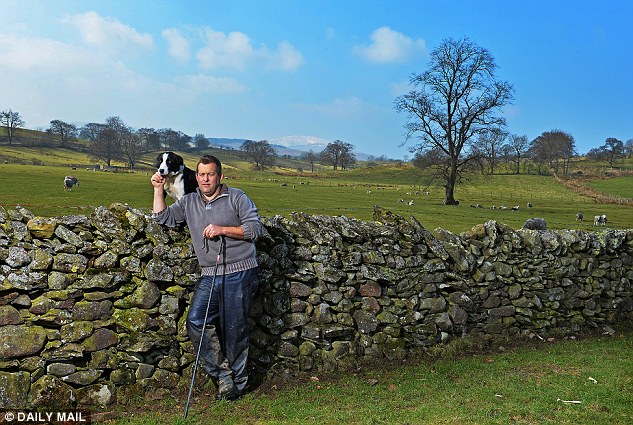
The Shepherd's Life by James Rebanks


Summary by Goodreads:
"Some people's lives are entirely their own creations. James Rebanks' isn't. The first son of a shepherd, who was the first son of a shepherd himself, he and his family have lived and worked in and around the Lake District for generations. Their way of life is ordered by the seasons and the work they demand, and has been for hundreds of years. A Viking would understand the work they do: sending the sheep to the fells in the summer and making the hay; the autumn fairs where the flocks are replenished; the gruelling toil of winter when the sheep must be kept alive, and the light-headedness that comes with spring, as the lambs are born and the sheep get ready to return to the fells."

NY Times Review:
http://www.nytimes.com/2015/06/02/books/review-the-shepherds-life-by-james-rebanks-an-english-sheep-farmer.html

Review in The Guardian: https://www.theguardian.com/books/2015/apr/04/the-shepherds-life-tale-lake-district-james-rebanks-review

Video by the Author on Youtube: https://www.youtube.com/watch?v=aKPpv9rA5Uk

Conversation with the Author: http://www.abc.net.au/local/stories/2016/05/31/4472652.htm

Discussion Questions to follow.


Hard Choices by Hillary Clinton


Summary from Amazon:
"Hillary Rodham Clinton’s inside look at the choices and challenges she has faced is “a subtle, finely calibrated work…with succinct and often shrewd appraisals of the complex web of political, economic, and historical forces in play around the world” (The New York Times).

In the aftermath of her 2008 presidential run, Hillary Rodham Clinton expected to return to the United States Senate. To her surprise, newly elected President Barack Obama asked her to serve in his administration as Secretary of State. “Hard Choices is a richly detailed and compelling chronicle of Clinton’s role in the foreign initiatives and crises that defined the first term of the Obama administration…it teems with small, entertaining details about her interactions with foreign leaders (Los Angeles Times).

Secretary Clinton and President Obama had to decide how to repair fractured alliances, wind down two wars, and address a global financial crisis. Along the way, they grappled with tough dilemmas, especially the decision to send Americans into harm’s way, from Afghanistan to Libya to the hunt for Osama bin Laden. By the end of her tenure, Secretary Clinton had gained a truly global perspective on the major trends reshaping today’s landscape."


Simon and Schuster Website for the book: 
http://www.simonandschuster.com/books/Hard-Choices/Hillary-Rodham-Clinton/9781476751474

NY times Review: 
http://www.nytimes.com/2014/07/06/books/review/hillary-rodham-clintons-hard-choices.html?_r=0

Washington Post Break down Chapter by Chapter:
https://www.washingtonpost.com/news/post-politics/wp/2014/06/09/hard-choices-we-read-it/

Interview on C-Span: https://www.c-span.org/video/?319882-1/hillary-clinton-hard-choices

Monday, August 15, 2016

Caravans by James A. Michener


Summary from Amazon:
"First published in 1963, James A. Michener’s gripping chronicle of the social and political landscape of Afghanistan is more relevant now than ever. Combining fact with riveting adventure and intrigue, Michener follows a military man tasked, in the years after World War II, with a dangerous assignment: finding and returning a young American woman living in Afghanistan to her distraught family after she suddenly and mysteriously disappears. A timeless tale of love and emotional drama set against the backdrop of one of the most important countries in the world today, Caravans captures the tension of the postwar period, the sweep of Afghanistan’s remarkable history, and the inescapable allure of the past."

Discussion Questions from seniorlearn.org:
1. ---Is Ellen Jaspar a lost soul ? A "free spirit" ? An idealist ?

2. --- Do you think it is possible for a "ferangi" to become attached to an untamed - perhaps untamable - country like Afghanistan in 1946, or now for that matter, and to wholeheartedly embrace a different faith and culture ?


3. --- How do you feel about the narrator ? Is your impression of him changing as the story progresses ?


4.--- Is the violence that is so much a part of the Afghans' lives the (perhaps inevitable) result of their constant battles against the implacable forces of nature ?
http://seniorlearn.org/bookclubs/archives/fiction/Caravans.htm


Wednesday, August 10, 2016

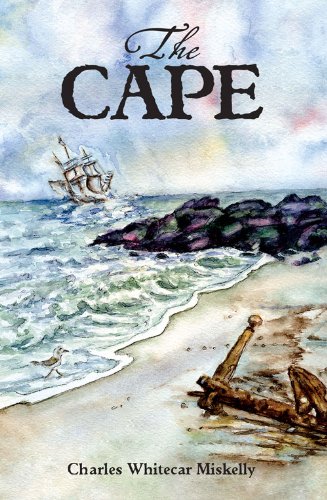
The Cape by Charles Whitecar Miskelly


Summary by Amazon:
"A British sailor is shipwrecked in the early 17th century off the coast of what is now Cape May, New Jersey, where he befriends and becomes an honorary member of the Lenni-Lenape tribe, the Cape's native inhabitants. Under the tightening grip of the white settlers, McJack finds himself in the unusual position of leading his tribe to safety. This riveting, beautiful story showcases themes of love, honor, and duty while offering a morsel of little-known East Coast history. It also reveals a chapter in mid-20th-century publishing practices, as a renowned publisher of the era was primed and ready to market the author Charles Whitecar Miskelly as another Rudyard Kipling, Oscar Wilde, or Jack London, if only Miskelly himself had understood that the typical editorial policies of the time were not necessarily diametrically opposed to his artistic vision. Decades later, this lost treasure of historical adventure is ready to be shared with the world."


Exit Zero Publishers: They have super fun stores and an excellent Indian Restaurant in West Cape May


Discussion Questions being developed:
(From the Philly Mag. story above) 1. Carlisle doesn’t know how his grandfather learned to write, or how he crafted a story about a group that didn’t even admit its own existence. Did he work with Native Americans at the shipyard? Did he have friends he visited on his long solo bike rides from Bricksboro to Cape May? Was he himself a descendant of American Indians? His ancestors arrived in the United States around the time of John McJack’s shipwreck. What do you think?
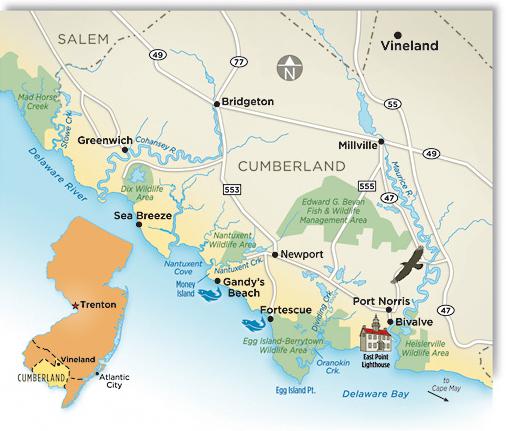
2. Where does this story take place? View the maps for clues?
3. What are some of your favorite deeds that McJack does?
4. 


Maurice River Bluffs (Photo by Mike Crewe)

(Cape May Point)


Saturday, July 9, 2016

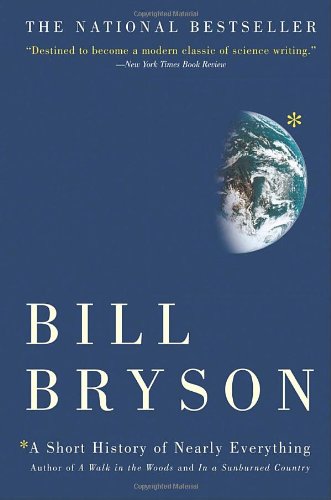
A Short History of Nearly Everything by B. Bryson


Summary from Random House:
"In A Short History of Nearly Everything, the bestselling author of One Summer, confronts his greatest challenge yet: to understand—and, if possible, answer—the oldest, biggest questions we have posed about the universe and ourselves. Taking as his territory everything from the Big Bang to the rise of civilization, Bryson seeks to understand how we got from there being nothing at all to there being us. The result is a sometimes profound, sometimes funny, and always supremely clear and entertaining adventure in the realms of human knowledge, as only Bill Bryson can render it."

NY Times Reviewhttp://www.nytimes.com/2003/05/18/books/atoms-the-size-of-peas.html

Bookrags materialshttp://www.bookrags.com/studyguide-a-short-history-of-nearly-everything/#gsc.tab=0

Random House Teacher Guide:
https://www.randomhouse.com/catalog/teachers_guides/9780767908184.pdf

Author's Website: https://www.penguin.co.uk/authors/bill-bryson/1017933/

Discussion Questions from Litlovers:
1. This book presents science as a series of questions—mostly unanswered. Is this surprising to you? How was science presented to you when you were in school?

2. Bryson mentions that, several times in the past, scientists thought that all the big questions were answered. Some even believe we have reached that point today. Still others wonder if we might soon reach the limits of our intellectual ability to understand the strangeness of atomic particles or explore multiple universes. Any thoughts?

3. A major theme of the book is resistance to new scientific ideas despite solid evidence for them. Bryson gives a number of examples—the Big Bang and plate tectonics are two. What other theories faced initial rejection?
4. Follow-up to Question 3: At the same time, Bryson addresses the idea of scientists clinging to widely accepted but disproven ideas—a young earth and Ether are two that come to mind. What are some of the others in the book?
• Why do you think scientists are resistant to change?
• Are scientists any different from lay people in their resistance to change?
• What current widely held idea do you think might be disproven in the future?
5. Bryson often cites examples of global crises that may have influenced the Earth in the past—meteor strikes, salinity crisis, volcanoes, changes in solar output. How does this relate to the current consideration of global warming?

6. Follow-up to Question 5: Considering the Bryson's examples of powerful global forces beyond human control—including hurricanes, plate tectonics, earthquakes, volcanic eruptions, and ice ages—do you think differently about human ability to control what happens on earth? To what extent are we "masters" of the earth?

7. What is the connection between human beings and extinction of other species? Consider, for instance, how the dodos and passenger pigeons became extinct? Bryson makes a number of statements on the subject. What do you think?
• Over the last 50,000 years or so, wherever we have gone, animals have tended to vanish, in often astonishingly large numbers.
• The people who were most intensely interested in the world’s living things were the ones most likely to extinguish them.
• It’s an unnerving thought that we may be the living universe’s supreme achievement and it’s worst nightmare simultaneously.
•  We enjoy not only the privilege of existence but also the singular ability to appreciate it and even to make it better.
8. How has this book affected your thinking about evolution? Do you agree that evolution may be "a lottery" or that, as human beings, "we are not the culmination of anything”?

9. Do a little research into Drake’s equation for the possibility of  life on other worlds. Do you think life in the universe is inevitable or rare? Why? How about other complex (multi-cellular) life? How about intelligent life?

10. Bryson presents scientists as human beings with very human stories. Many died unhappy receiving no recognition or credit for their work. How would you feel if this happened to you? Which story touches you the most?

11. Consider the common question: “Why are there so few women scientists?” Does this book agree there is a shortage, or does it tell us why we don't hear about female scientists? Consider doing some research on Mme Lavoisier, Curie, or Franklin.

(Questions adapted from the Penguin Random House Teachers Guide.)

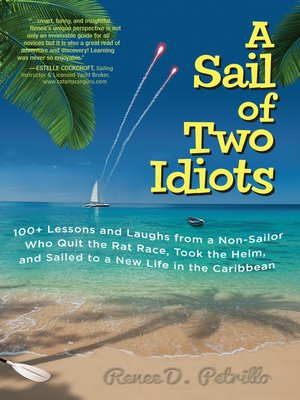
A Sail of Two Idiots by R. Petrillo


Summary: A couple from Arizona, with no sailing experience, sell everything, buy a sailboat and off they sail. The book is about their adventures, the many problems they encounter and the lessons they learn. They share excellent information of what to do and not do. They sail from Miami to Grenada and share about the islands, that they visit along the way.

Book blog site: http://asailoftwoidiots.blogspot.com/

Facebook page: https://www.facebook.com/ASailOfTwoIdiots/?fref=nf

Top 10 Sailing Books 2016: https://wiki.ezvid.com/best-sailing-books

Summer Reads for Sailors: http://www.practical-sailor.com/issues/37_19/features/summer_reading_for_sailors_10829-1.html

Author's Blog site: http://islandbabble.blogspot.com/

Discussion Questions:
1. What difficulties did the author and her husband experience on this sailing adventure?  How much could have been avoided, if they had been experienced?

2. Do you think, if given the choice, they would do it again?

3. What events did you find surprising? Cost of used boat and keeping it running? Broker and captain experiences? Weather? Variability of islands, ports and harbors? Anchors? Cat?

4. Do you think the book and story would persuade or dissuade others from trying a similar experience?

5. What are some of the positive experiences they had? Did they outweigh the bad, in your opinion?

6. After reading this book, which islands would you like to visit?


Monday, April 11, 2016

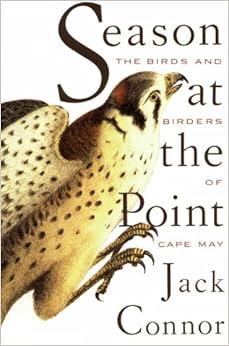
Season at the Point: The Birds and Birders of Cape May by J. Connor (1994)


**This book was recommended to us from a friend, who is active in the FL Audubon Society.

Summary from Amazon:
Cape May Point, New Jersey, is home to a natural phenomenon of stunning proportions. Each autumn millions of migrating birds converge here on their annual flight to wintering grounds as far away as Brazil and Peru. Season at the Point, the rich and telling story of the birds and birders of Cape May, evokes the sense of mystery and excitement that pervades the Cape as birders gather to count owls by the hundreds, hawks by the tens of thousands, and shorebirds and songbirds by the hundreds of thousands.


Available on Google Books:
Discussion Questions:
1. Is it possible to really understand migration patterns? What information would be needed to obtain this?
2. What were the some of the different approaches to birding amongst the birders, such as Al Nicholson versus others?
3. What role does banding play? To what degree does banding answer the questions to migration? What are some of its limitations?
4. Discuss the variability and difficulties in counting birds. Why was this type of information not considered to be solid data historically? 
5. Discuss the role of migration, orientation ability and timing and what it takes to successfully migrate.
6. Discuss the different birders, who they are and what perspectives do they bring.
7. How did the radar based data generated by the Clemson researchers change the way the hawk migration was viewed?
8. What impact has the hawk platform, bird counts and other birding events had on Cape May?


A 25th Anniversary of the writing of the book was celebrated on May 21, 2016 at The Grand Hotel in Cape May. The author did a reading and then led a panel discussion including several birding experts, who were highlighted in the book, including Pete Dunn, Paul Kerlinger, Jeff Boulton, and 
Pat and Clay Sutton.