Saturday, February 13, 2016

Cross Creek by M. Rawlings

Summary: 
From Good Reads:
Originally published in 1942, Cross Creek has become a classic in modern American literature. For the millions of readers raised on The Yearling, here is the story of Marjorie Kinnan Rawlings's experiences in the remote Florida hamlet of Cross Creek, where she lived for thirteen years. From the daily labors of managing a seventy-two-acre orange grove to bouts with runaway pigs and a succession of unruly farmhands, Rawlings describes her life at the Creek with humor and spirit. Her tireless determination to overcome the challenges of her adopted home in the Florida backcountry, her deep-rooted love of the earth, and her genius for character and description result in a most delightful and heartwarming memoir.

Reviews:
Literary Traveler Blog Article:
http://www.literarytraveler.com/articles/marjorie-kinnan-rawlings-cross-creek/

Author Obituary:
http://www.nytimes.com/learning/general/onthisday/bday/0808.html

Rawlings Societyhttp://rawlingssociety.org/rawlings-bio

Discussion Questions by Heidi and John:
1. Discuss the different relationships Rawlings has at Cross Creek!
2. Which season did you enjoy reading about the most?
3. Do you agree with her concept of the ownership of land?
4. A consistent theme in the book was her struggle to have reliable help. How does she portray the African American community at Cross Creek? Why doesn’t she ever discuss this population in the context of their history and culture?
5. Discuss Rawlings quest for justice during the shooting and what the rest of the community wanted!
6. Who were some of your favorite characters of the memoir?
7. Which foods and recipes would you want to try after reading about them?
8. Discuss her relationship with her natural environment!

Sunday, January 24, 2016

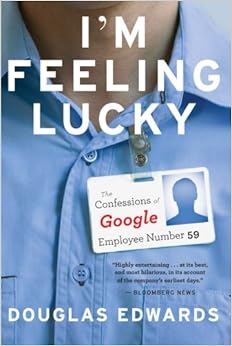
I'm Feeling Lucky: The Confessions of Google Employee Number 59 by Douglas Edwards


Summary from Amazon:
In its infancy, Google embraced extremes—endless days fueled by unlimited free food, nonstop data-based debates, and blood-letting hockey games. The company’s fresh-from-grad-school leaders sought more than old notions of success; they wanted to make all the information in the world available to everyone—instantly. Google, like the Big Bang, was a singularity—an explosive release of raw intelligence and unequaled creative energy—and while others have described what Google accomplished, no one has explained how it felt to be a part of it. Until now.

As employee number 59, Douglas Edwards was a key part of Google’s earliest days. Experience the unnerving mix of camaraderie and competition as Larry Page and Sergey Brin create a famously nonhierarchical structure, fight against conventional wisdom, and race to implement myriad new features while coolly burying broken ideas. I’m Feeling Lucky captures the self-created culture of the world’s most transformative corporation and offers unique access to the emotions experienced by those who virtually overnight built one of the world’s best-known brands.

Interview with the author: 


Discussion Questions: to follow


Sunday, December 20, 2015

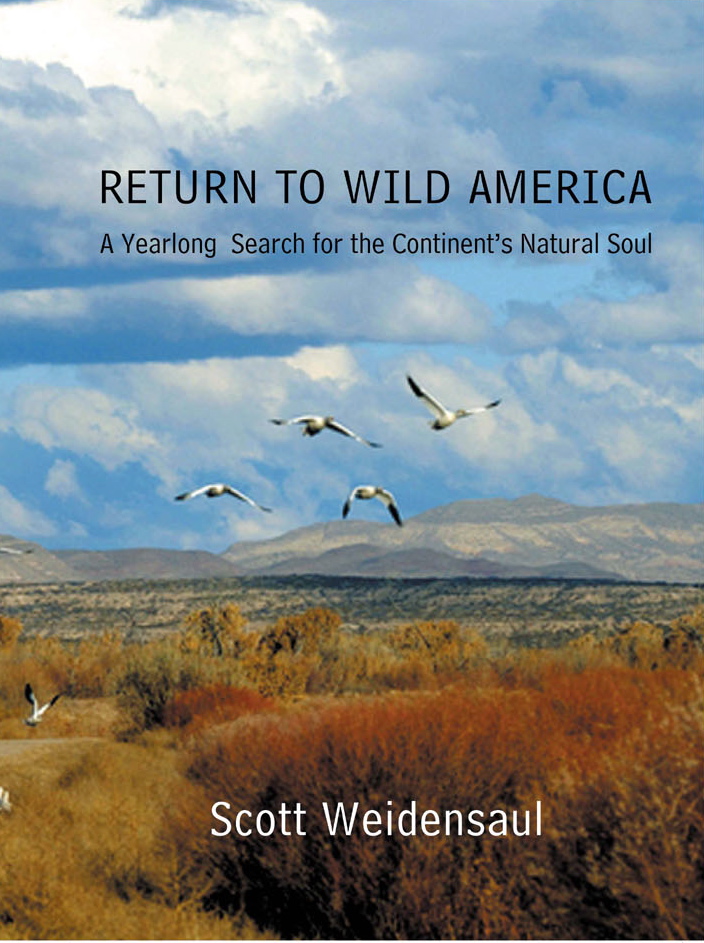
Return to Wild America by Scott Weidensaul


Summary from Amazon
In 1953, birding guru Roger Tory Peterson and noted British naturalist James Fisher set out on what became a legendary journey-a one hundred day trek over 30,000 miles around North America. They traveled from Newfoundland to Florida, deep into the heart of Mexico, through the Southwest, the Pacific Northwest, and into Alaska's Pribilof Islands. Two years later, Wild America, their classic account of the trip, was published.
On the eve of that book's fiftieth anniversary, naturalist Scott Weidensaul retraces Peterson and Fisher's steps to tell the story of wild America today. How has the continent's natural landscape changed over the past fifty years? How have the wildlife, the rivers, and the rugged, untouched terrain fared? The journey takes Weidensaul to the coastal communities of Newfoundland, where he examines the devastating impact of the Atlantic cod fishery's collapse on the ecosystem; to Florida, where he charts the virtual extinction of the great wading bird colonies that Peterson and Fisher once documented; to the Mexican tropics of Xilitla, which have become a growing center of ecotourism since Fisher and Peterson's exposition. And perhaps most surprising of all, Weidensaul finds that much of what Peterson and Fisher discovered remains untouched by the industrial developments of the last fifty years. Poised to become a classic in its own right, Return to Wild America is a sweeping survey of the natural soul of North America today.

The author's website: http://www.scottweidensaul.com/return-to-wild-america/

Discussion Questions from Hawk Mountain Book Club: https://www.facebook.com/notes/hawk-mountain-sanctuary-association/hawk-mountain-book-club-wild-america-discussion-questions/10150399300548602?comment_tracking=%7B%22tn%22%3A%22O%22%7D

Monday, November 16, 2015

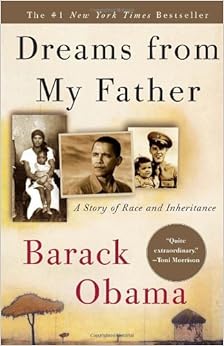
Dreams from My Father by Barack Obama


Mini-Summary from Litlovers: Dreams from My Father tells the story of Obama’s struggle to understand the forces that shaped him as the son of a black African father and white American mother—a struggle that takes him from the American heartland to the ancestral home of his great-aunt in the tiny African village of Alego.

NY Times Review: A Promise of Redemption:
http://www.nytimes.com/1995/08/06/books/review/06obama-dreams.html

Interview from 1995 regarding the book:
https://www.youtube.com/watch?v=Rx_XS4s6aA4

Discussion Questions from LitLovers:
1. Describe the difficulties Obama had as a child—not fitting in with white children and fearing social "out-casts."
2. Is it possible for any individual born of two ethnic origins to find a society in which he or she truly belongs? Think of recent authors who have struggled with similar issues: Amy Tan (Chinese), Jhumpa Lahiri (Indian), Louise Erdrich (Native American). Also consider the classics of African-American writers like Ralph Ellison's Invisible Man and Richard Wright's Native Son, Toni Morrison's Beloved.
3. Discuss Obama's family. What about his mother—would you have liked more attention paid to her in this work? Also consider his grandparents and they role they played in his life.
4. When he makes his trip to Kenya, what does he come to understand about his father—and his own heritage.
5. Do you feel Obama's attitude toward the all-white culture is one of blame, acceptance, resignation? Or something else?
6. Ultimately, Obama's memoir is a coming-of-age story in which a young man who straddles two cultures seeks his identity in the adult world. How—or how well—does he succeed? What conclusions does he reach?
7. Talk about his work as a community social worker on Chicago's south side. What does he learn or come to realize about his role in the African-American community?
8. Knowing now, as we do, of Obama's election as President of the United States, how do you view the primary events in his memoirs? In what ways have they shaped his political success and his political views?

Sunday, September 27, 2015

The Bees by Laline Paull


Summary:
This entertaining and creatively written story takes you deep into the bee hive, following the ever unique Flora 717 sanitation bee and her amazing adventures and unusual life.  She takes on the role of all the different bees, from feeding the larvae babies, to being a forager, meeting the queen and then doing the unthinkable.

Author's sitehttp://www.lalinepaull.com/the-bees/synopsis/

NY Times Review: "Hive Mentality" -
http://www.nytimes.com/2014/05/25/books/review/the-bees-by-laline-paull.html?_r=0

The Guardian Reviewhttp://www.theguardian.com/books/2014/may/21/bees-laline-paull-fantasy-novel-review

Interview with the author by Bookanista: http://bookanista.com/laline-paull/

Discussion Questions:
1. What are some of the ways the book informs how bees function. How did the author help you visual, feel and understand this in new ways.
2. What genre would you place this book?
3. Flora is often described as heroic. Why and how?
4. How does Flora's knowledge of the archives help her and the hive?
5. How do the bees view of the world beyond and how do they respond and interact with it?
6. How does the the life of the bees in this story diverge from the true life of bees?
7. How is Flora different from the other bees?
8. Would agree that this a "Cinderella" story? How?
9. Would you recommend this book for a book prize and why?
10. Has this book inspired you to become a beekeeper?

Friday, August 28, 2015

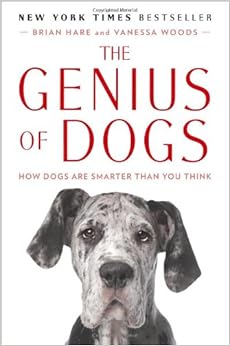
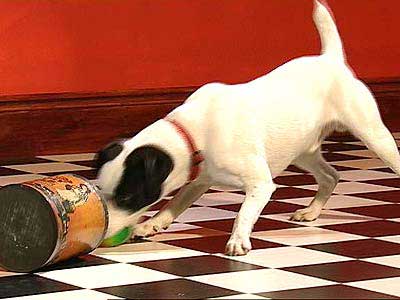
The Genius of Dogs by Brian Hare and Vanessa Woods


Summary: Brian Hare, Founder of Duke Canine Cognition Center, and his colleague, V. Woods, present their findings at the center and also review of the literature regarding dog's intelligence, their connection to humans as well about what it is to be a genius!

Interviews: 


Review: 

b." The Genius of Dogs and The Hidden Lives of Wolves" by M. Bekoff, Psychology https://www.psychologytoday.com/blog/animal-emotions/201302/the-genius-dogs-and-the-hidden-life-wolves


Suggested additional reading - a story that perhaps inspired Brian Hare? : Kurt Vonnegut, "Welcome to the Monkey House: Tom Edison's Shaggy Dog"

(http://www.sciencebuddies.org/Files/2616/3/MamBio_img013.jpg)


Our Discussion Questions:
1. What are the advantages of natural selection versus self-domestication for wolves/dogs? What are roles for each of these? See page 105 for discussion, including about Bonobos, the dog of Apes.
2. How can friendliness and socialization contribute to survival for all species? See pages 112-114.
3. After reading this book, do you think humans are more similar to bonobos or chimpanzees, behaviorally? 
4. What impact can self-domestication have on a ecosystem?
5. How do both self-domestication and assisted domestication contribute to the development of dogs?
Who domesticated whom?
6. Compare the social structures of wolves versus dogs?
7. How important was the Russian experiment of domesticating silver foxes for understanding dog domestication?
8. Which domesticated animals share some of the same relationship characteristics as dogs with humans?  Which are more similar and which are less so?


Saturday, July 11, 2015

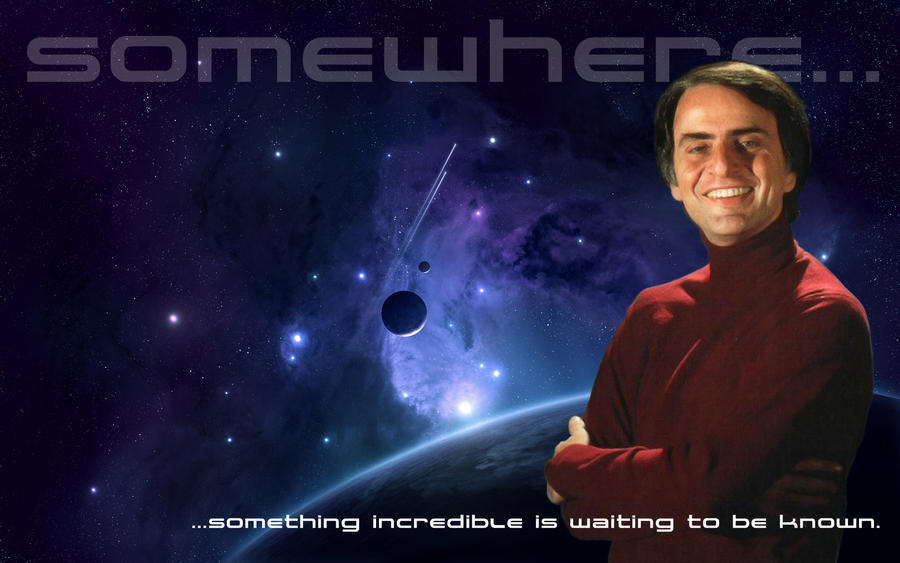
Cosmos by Carl Sagan

Summary from Good Reads:
Cosmos has 13 heavily illustrated chapters, corresponding to the 13 episodes of the Cosmos television series. In the book, Sagan explores 15 billion years of cosmic evolution and the development of science and civilization. Cosmos traces the origins of knowledge and the scientific method, mixing science and philosophy, and speculates to the future of science. The book also discusses the underlying premises of science by providing biographical anecdotes about many prominent scientists throughout history, placing their contributions into the broader context of the development of modern science.

The book covers a broad range of topics, comprising Sagan's reflections on anthropological, cosmological, biological, historical, and astronomical matters from antiquity to contemporary times. Sagan reiterates his position on extraterrestrial life—that the magnitude of the universe permits the existence of thousands of alien civilizations, but no credible evidence exists to demonstrate that such life has ever visited earth.

Interview with Rolling Stonehttp://www.rollingstone.com/culture/features/the-cosmos-19801225

Smithsonian Article: " Why Carl Sagan is Truly Irreplaceable." March 2014:
http://www.smithsonianmag.com/science-nature/why-carl-sagan-truly-irreplaceable-180949818/?no-ist

Interview with Ted Turnerhttps://www.youtube.com/watch?v=DV-YNO4ZeTM

National Geographic Article: http://channel.nationalgeographic.com/cosmos-a-spacetime-odyssey/articles/carl-sagan-and-the-cosmos-legacy/

Original Series on YouTube: http://www.openculture.com/2014/03/carl-sagans-original-cosmos-series-on-youtube.html or https://www.youtube.com/playlist?list=PLBA8DC67D52968201


Bill Moyer's Interview with Neil deGrasse about the new Cosmos Serieshttp://billmoyers.com/episode/neil-degrasse-tyson-on-the-new-cosmos/

Discussion Questions:
A. From Athena: http://www.athenalearning.com/programs/cosmos/discussion-guide
B: Questions for the 2 series: http://phyz.org/cosmos/