Saturday, June 27, 2015

A Year in Provence by Peter Mayle


Summary:
The British author shares his experiences and adventures, month by month, about his new life in Provence in the Luberon area after purchasing a 200 year old stone farm house. It's witty, funny and he captures the essences of this unique area.


Discussion Questions:
1. How well did Mayle's frequent trips to Provence as a tourist prepare him for the reality of residing there? What were some of the initial surprises he and his wife encountered?
2. How does the form of the book--a month-by-month journal--enhance the immediacy of Mayle's observations and draw the reader into his experiences? How do the changing seasons mirror Mayle's own adjustment to his new environment?
3. Mayle writes that neighbors take on an importance in the country that they don't have in the city [p. 6]. How do his relationships with Faustin, Massot, Menicucci, and the other local workmen reflect this? Does the fact that Mayle is a foreigner influence the way he is treated? How do the men working on his house endear themselves to Mayle, despite his continuing frustrations with their casual attitude about completing the job?
4. Mayle notes there are "two areas of endeavor in which France leads the world-- bureaucracy and gastronomy" [p. 23]. What particular characteristics of the French does Mayle bring to light in stories about the bureaucracy involved in buying the house, a car, insurance, and other necessities?
5. The influx of tourists begins in May and reaches a high point in August. How does his status as a resident affect Mayle's attitudes about friends and acquaintances who, as he himself once did, try to take in everything Provence has to offer during a short holiday? Does he learn things about himself and the life he has chosen by looking through the eyes of visitors? To what extent are his own perceptions influenced by his English upbringing?
6. How does the Mayles' party for the workmen and their wives, as well as their own Christmas dinner at a local restaurant, put the events of the year into context and serve as a coda to the book as a whole?
(Questions issued by publisher.) 

Monday, April 13, 2015

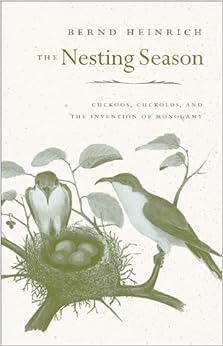
The Nesting Season by Bernd Heinrich


Summary: Bernd Heinrich provides an in-depth study of bird's songs, mating rituals, sex roles, predation, migration, and nesting behaviors in this fascinating and engaging book. He discusses in detail the variety of strategies birds use to reproduce and its complexities. There are some surprising and unexpected twists in bird romancing. It includes beautiful photos and the author's watercolors. It's a great read for Spring.

Harvard Press Book Information including Reviews, Table of Contents and More: http://www.hup.harvard.edu/catalog.php?isbn=9780674061934

Saint Paul Audubon - Review:
http://www.saintpaulaudubon.org/education/nesting-season-cuckoos-cuckolds-and-invention-of-monogamy

NPR Interview: "Nesting with a Naturalist":
http://www.npr.org/templates/story/story.php?storyId=127240669

Interview on Science Friday with Ira:
http://www.sciencefriday.com/segment/05/28/2010/naturalist-bernd-heinrich.html

Northern Woodlands Site: Great Article and Photos about Nests: "Which Bird Made That Nest?"
http://northernwoodlands.org/articles/article/which-bird-made-that-nest/


Sunday, April 12, 2015

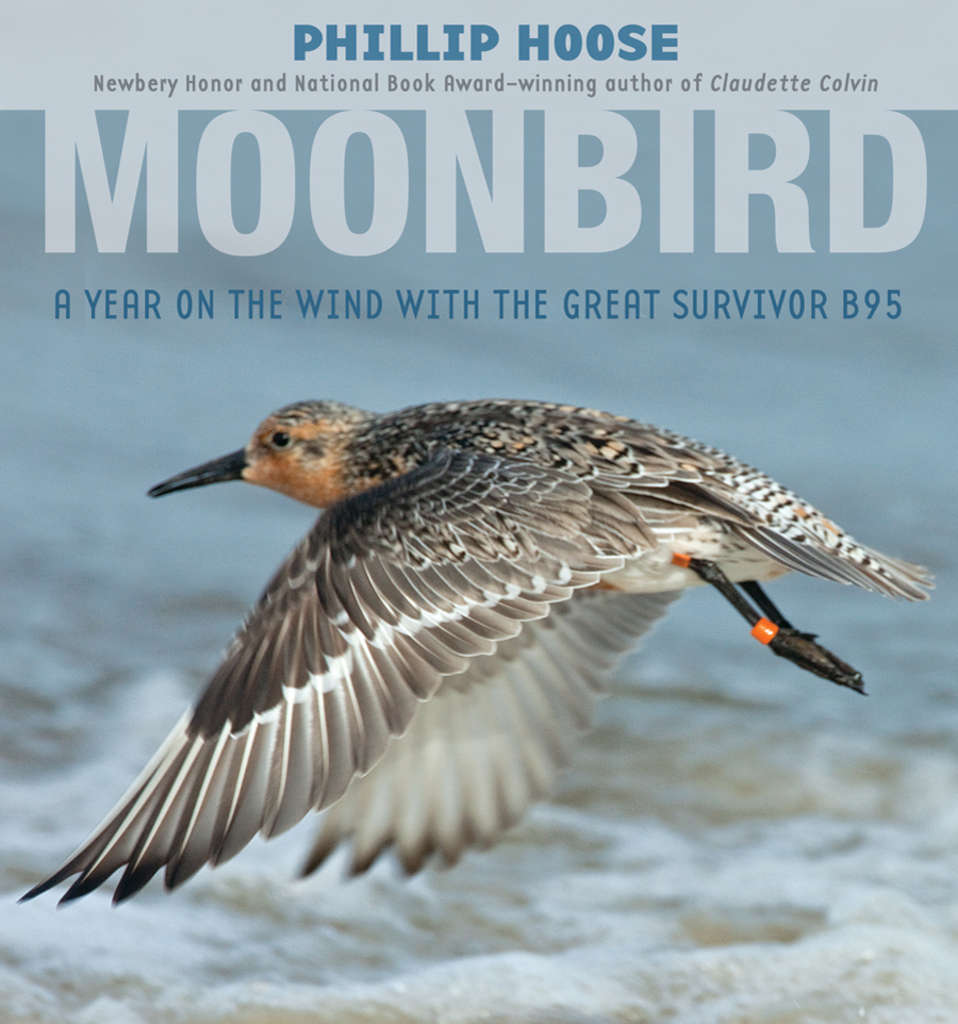
Moonbird by Phillip Hoose


Summary:
This is the incredible story about B95, a male rufa Red knot, who flies over 18,000 miles per year from Tierra del Fuego to his breeding grounds in the Canadian Arctic and back again. His species has declined by 80% due to lost habitat and food availability. This book is about his life and questions why and how he has survived for over 20 years. Find out why he is called "Moonbird".

Review by The Horn Book: http://www.hbook.com/2012/08/choosing-books/review-of-the-week/review-of-moonbird-a-year-on-the-wind-with-the-great-survivor-b95/

Phillip Hoose's Website: http://www.philliphoose.com/books/moonbird/

Nature Conservancy Article: http://www.nature.org/ourinitiatives/regions/northamerica/canada/b95-the-toughest-four-ounces-of-life.xml

Teacher's Guidehttp://images.macmillan.com/folio-assets/teachers-guides/9780374304683TG.pdf


Thursday, March 12, 2015

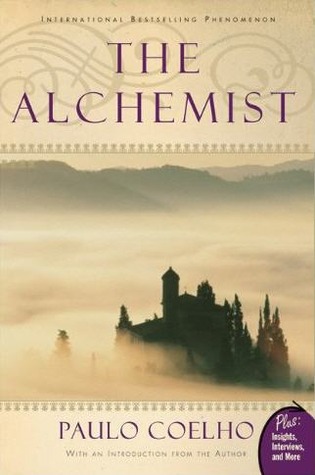
The Alchemist by Paulo Coehlo


Summary from Amazon:
It's a story about Santiago, an Andalusian shepherd boy who yearns to travel in search of a worldly treasure as extravagant as any ever found.
The story of the treasures Santiago finds along the way teaches us, as only a few stories can, about the essential wisdom of listening to our hearts, learning to read the omens strewn along life's path, and, above all, following our dreams.

Reviews:
From the NYTimes: "Writing in a Global Language": 

Interview with the author:


Author's Blog: 

Discussion Questions from Litlovers:
1. At the start of his journey, when Santiago asks a gypsy woman to interpret his dream about a treasure in the Egyptian pyramids, she asks for one tenth of the treasure in return. When Santiago asks the old man to show him the path to the treasure, the old man requests one tenth of his flock as "payment." Both payments represent a different price we have to pay to fulfill a dream; however, only one will yield a true result. Which payment represents false hope? Can you think of examples from your own life when you had to give up something to meet a goal and found the price too high?
2. Paulo Coelho once said that alchemy is all about pursuing our spiritual quest in the physical world as it was given to us. It is the art of transmuting the reality into something sacred, of mixing the sacred and the profane. With this in mind, can you define your Personal Legend? At what time in your life were you first able to act on it? What was your "beginner's luck"? Did anything prevent you from following it to conclusion? Having read The Alchemist, do you know what inner resources you need to continue the journey?
3. One of the first major diversions from Santiago's journey was the theft of his money in Tangiers, which forced him into taking a menial job with the crystal merchant. There, Santiago learned many lessons on everything from the art of business to the art of patience. Of all these, which lessons were the most crucial to the pursuit of his Personal Legend?
4. When he talked about the pilgrimage to Mecca, the crystal merchant argued that having a dream is more important than fulfilling it, which is what Santiago was trying to do. Do you agree with Santiago's rationale or crystal merchant's?
5. The Englishman, whom Santiago meets when he joins the caravan to the Egyptian pyramids, is searching for "a universal language, understood by everybody." What is that language? According to the Englishman, what are the parallels between reading and alchemy? How does the Englishman's search for the alchemist compares to Santiago's search for a treasure? How did the Englishman and Santiago feel about each other?
6. The alchemist tells Santiago "you don't have to understand the desert: all you have to do is contemplate a simple grain of sand, and you will see in it all the marvels of creation." With this in mind, why do you think the alchemist chose to befriend Santiago, though he knew that the Englishman was the one looking for him? What is the meaning of two dead hawks and the falcon in the oasis? At one point the alchemist explains to Santiago the secret of successfully turning metal into gold. How does this process compare to finding a Personal Legend?
7. Why did Santiago have to go through the dangers of tribal wars on the outskirts of the oasis in order to reach the pyramids? At the very end of the journey, why did the alchemist leave Santiago alone to complete it?
8.Earlier in the story, the alchemist told Santiago "when you possess great treasures within you, and try to tell others of them, seldom are you believed." At the end of the story, how did this simple lesson save Santiago's life? How did it lead him back to the treasure he was looking for?
(Questions issued by publisher.)


Sunday, February 8, 2015

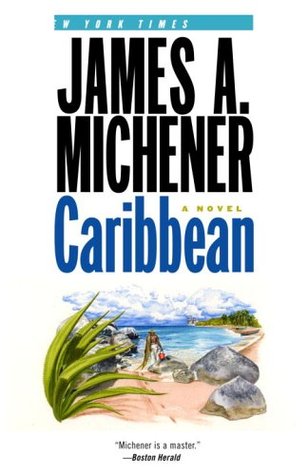
Caribbean by James Michener

Book Description from Good Reads:
In this acclaimed classic novel, James A. Michener sweeps readers off to the Caribbean, bringing to life the eternal allure and tumultuous history of this glittering string of islands. From the 1310 conquest of the Arawaks by cannibals to the decline of the Mayan empire, from Columbus’s arrival to buccaneer Henry Morgan’s notorious reign, from the bloody slave revolt on Haiti to the rise of Cuba’s Fidel Castro, Caribbean packs seven hundred dramatic years into a tale teeming with revolution and romance, authentic characters and thunderous destinies. Through absorbing, magnificent prose, Michener captures the essence of the islands in all of their awe-inspiring scope and wonder.

NY Times Review:
http://www.nytimes.com/1989/11/02/books/books-of-the-times-the-caribbean-as-lead-character-in-a-michener-novel.html

Interview with Michener:
http://articles.philly.com/1989-01-02/news/26122358_1_big-books-mari-michener-opera-book

Michener at Work Video while working on the book:
http://vimeo.com/68499106

Interview about his life:
http://www.achievement.org/autodoc/page/mic0int-1

Discussion Questions:
To Follow

Friday, January 30, 2015

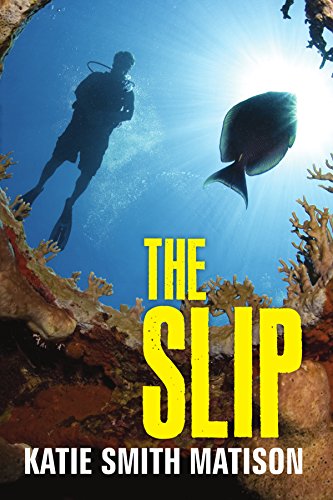
The Slip by Katie Smith Matison


Summary from Amazon:
In 1920, the Byzantium sank off the coast of St. Thomas with its precious cargo of emeralds. Underwriters of Lloyd’s of London took ownership of the sunken hull and whatever emeralds might someday be salvaged. Nearly a century later, treasure recovery becomes big business. Salvage companies and bounty hunters comb the ocean floor for lost gems. As widow Brandy Blake soon finds out, treasure recovery isn’t just lucrative, it’s also dangerous.
When Brandy returns to her native New Orleans to rebuild her life after her husband dies while searching for Byzantium’s lost emerald’s, she realizes that he recovered more jewels than he every let on.  But Brandy isn’t the only one who knows about her husband’s stash. Recov, an unscrupulous salvage company, wants the emeralds, and the award money that comes with it.
Brandy’s daughter, Rene, become blackmail collateral, but Rene has an ally in Raleigh, an unusual squirrel. The unlikely twosome flee alligators, poisonous snakes and a sociopath in the Louisiana swamps while Brandy battles for her daughter’s safety and her husband’s hard won legacy.
Matison’s legal thriller, The Slip, takes the reader on a wild ride into the intriguing realm of modern day treasure hunting.

Kirkus Review:


About the Author:
Katie Smith Matison is a Maritime attorney practicing in Seattle. She received her JD and an LLM in Admiralty from Tulane University in New Orleans. She has published numerous articles regarding maritime law in Lloyd’s of London Press, the Tulane Maritime Law Journal and the Journal of Transportation, Logistics and Policy. After working as a district attorney, she now focuses on maritime law, handling cases for the London insurance market and various insurers.


Discussion Questions from the author and book club leaders:
1. Discuss the backdrop of the book and settings – Virgin Islands, New Orleans, swamps, etc.

2.  Discuss the characters of the book:

a. Discuss the women and their relationships.

b. Her husband’s business partner was obviously a bad guy. What do you surmise about her husband? Discuss the different men, including Thad and Ewan.

c. Discuss the animal characters and their role in the story. (Raleigh, Kiki, Chloe)

d. Who was your favorite character and why?

3. Were you surprised that Brandy and Claude didn’t get together and what do you think happened?

4. What do you think Brandy should have done when she found the emeralds?

5. Do you think Brandy should have tried to settle the lawsuits earlier? Could that have avoided her daughter’s kidnapping?

6. What do you think about the swamp scenes with Raleigh and Rene?

7. What did you like most about the book? Least?

8. When did you make the connection between Raleigh and Gerald Morris?  See p 489. Did you feel that Raleigh finally achieved what Gerald could not do in life? 

9. What are your thoughts about reincarnation?